

Professional alarm or self-install alarm: real differences and which to choose
Comparing a professional alarm vs a self-install alarm is one of the first questions when protecting a home or a business. Kits bought online promise to be installed in an afternoon and with no fees, whereas a professional system involves a survey, an installation and, normally, a connection to a receiving centre. In this guide we explain how they really differ, what the regulations say and in which cases each option makes sense, so that you can decide with sound judgement.
VIAN SEGUR guide · Comparisons
It is not just who installs it, it is what happens when it goes off
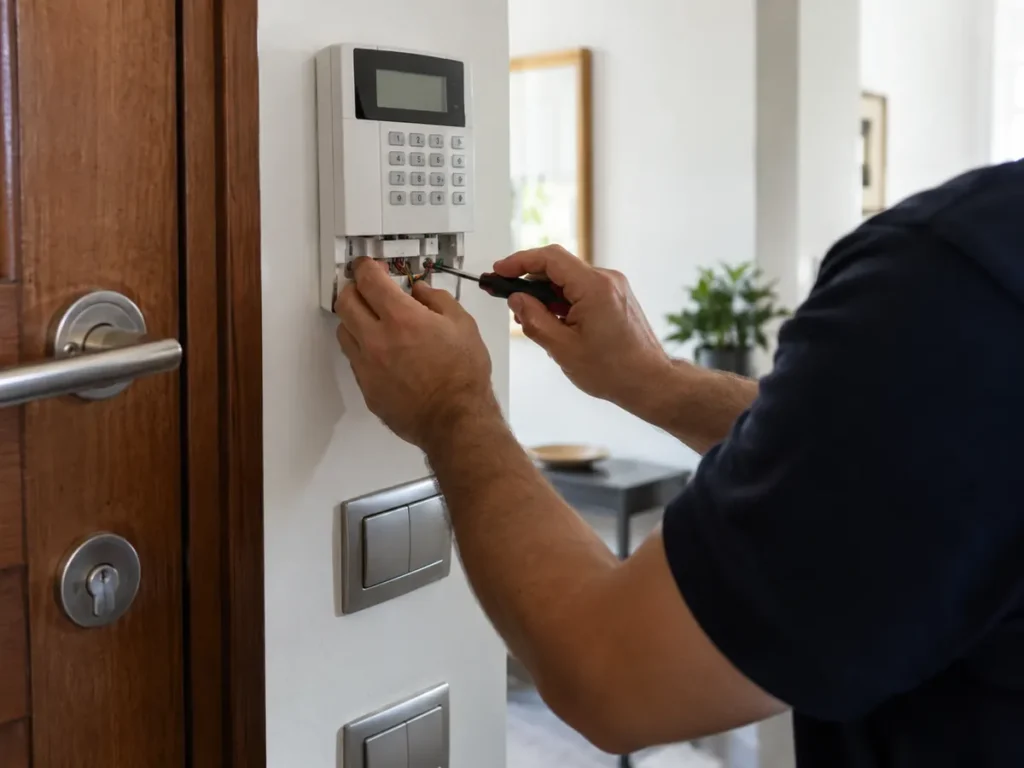
A kit and a professional system can look alike in the box, but not in design, grade, communications or the response to an alert. At VIAN SEGUR we study the property before proposing any equipment.

Since 1989
Experience in security systems
Assigned technician
Follow-up and maintenance

GSM / LAN
Dual-path communication

Remote management
Control and alerts from your mobile

What a self-install alarm is and what a professional alarm is
A self-install alarm is a kit that the user buys themselves, normally with a control panel, a motion detector or two, door contacts and a siren. It is fitted by following the instructions and managed from an app. When it detects something, it alerts the owner's mobile and it is the owner who decides what to do.
A professional alarm is a system designed and installed by a security company after studying the property. The equipment is chosen according to the risk, placed where it provides real detection, and the system can be connected to an Alarm Receiving Centre that handles alerts 24 hours a day.
Both options use similar technology: control panels, detectors, contacts and sirens. The difference lies in everything surrounding the equipment: who chooses it, how it is placed, what security level it is certified to, how it communicates and what happens after the alert goes off.
Who decides where each device goes
With the kit, the user. With the professional system, a technician who knows how an intruder gets in and which mistakes cause false alarms.
Who receives the alert
With the kit, your mobile. With the professional system connected to an ARC, an operator who verifies the alert and triggers the agreed response.
Who responds if something fails
With the kit, the user themselves. With the professional one, the installation company and, in the case of VIAN SEGUR, an assigned technician.
Differences in design and installation
The effectiveness of an alarm depends less on the device than on where it is placed. A badly aimed detector leaves areas uncovered or goes off with the heating; a contact on the main door does not protect the terrace through which someone really gets in. It is in the design that the difference is most noticeable.
In a professional installation, the property is walked through, the real entrances, the interior routes and the valuable areas are identified, and it is decided how many devices are needed and of what type. It is not about installing more, but about installing what is necessary in the right place.
Closed kits versus tailor-made systems
The kit comes with a fixed number of devices and the home is adapted to the kit. At VIAN SEGUR we do not sell closed kits: we choose and combine technology according to the risk of each property.
Wired, wireless or hybrid
Kits are almost always wireless. An installer can combine wired equipment where there are conduits and wireless equipment where there are not, in a hybrid system.
Adjustment and testing
Each detector is programmed according to the room, coverage is tested and the user is shown how to use the system. That adjustment is what prevents most false alarms.
Security grade and regulations
The UNE-EN 50131 standard classifies alarm systems into grades 1 to 4. Many consumer kits are designed for low risks and are not certified to be connected to a receiving centre, because private security regulations require systems connected to an ARC to be at least grade 2.
In addition, in Spain the installation and maintenance of systems connected to a receiving centre must be carried out by authorised security companies. That is why an alarm that the user installs on their own cannot simply be connected to an ARC, even if the equipment technically allowed it.
Grade 2 for homes and businesses
It is the usual level in flats, villas, offices and shops. It requires self-protection, supervision of equipment and communications, and event logging.
Grade 3 when the activity requires it
Jewellers, financial institutions and other obliged establishments need a grade 3 system, with anti-masking detectors and more demanding communications. A kit does not cover that case.

Comparison: professional alarm or self-install kit
This table summarises the practical differences between the two options. It is a general reference: each kit and each installation has its own characteristics.
Aspect
Self-install alarm
Professional alarm
Design
Decided by the user following the instructions
Survey of the property and tailor-made design
Installation
Done by the user themselves
Technician and engineer, with the system programmed and tested
Security grade
Usually designed for low risks
Grade 2 or grade 3 depending on the risk and the activity
Alert
Notification to the user's mobile
ARC connection that verifies the alert 24 hours a day
Communications
Tends to depend on the home wifi
Supervised dual-path GSM/LAN
Maintenance
Up to the user
Annual review and assigned technician
No alarm is better simply because it is expensive or cheap. What matters is that the system responds to the real risk of the property and that someone takes care of keeping it working.
What happens when the alarm goes off
This is the difference that weighs most in practice. With a kit, the alert reaches your mobile: if you are in a meeting, asleep or out of coverage, nobody reacts. And if you are available, you are the one who has to judge whether it is a real intrusion and call the police.
With an alarm connected to an ARC, the receiving centre receives the signal, verifies it by audio or image to rule out false alarms and, if an intrusion is confirmed, alerts the security forces and the contact persons. We explain it in detail in what an alarm receiving centre is.
Communication that does not depend on a single channel
Many kits only use the home wifi: if the router goes down or the power goes out, the alarm is cut off. VIAN SEGUR alarms use dual-path GSM/LAN, so that if one channel goes down or is jammed, the alert goes out through the other.
Protection against jammers
Professional systems detect attempts to block communication and raise an alert. It is one of the most commonly used techniques to neutralise simple alarms.
Management from your mobile in both cases
A professional system can also be operated from your mobile: arm, disarm, receive alerts and view the cameras. The difference is that you do not depend only on yourself to react.
Medium-term cost: beyond the price of the kit
The kit has a low purchase price and often no fees. But it is worth comparing what each option covers over the years: who checks batteries and detectors, who adapts the system if you change a door or renovate, and what happens if a device fails on the very day you go on holiday.
A professional system includes survey, project, installation, configuration and maintenance, and, if it is connected to an ARC, the alarm receiving service. If you want to go deeper into this part, we have a guide on alarm with or without monthly fees.
When a kit may be enough
A storage room with no value, a shed or a low-risk home where only a mobile alert is sought and it is accepted that the response depends on the owner.
When a professional system is advisable
Main homes and second homes, villas with grounds, shops, offices and any property where a 24-hour response is wanted, even if nobody is looking at the mobile.
Daily use and false alarms
A system that gives false alarms ends up switched off. With kits it is frequent, because the detectors are placed where they are easy to fix and not where they should be, and nobody adjusts their sensitivity to the room, the heating or the pets.
In a professional installation these factors are taken into account from the start, partial arming modes are configured so that you can be at home with the alarm armed, and the use of the keypad and the app is explained. Knowing the system well prevents most false alarms, and if a doubt arises, the assigned technician resolves it.
How VIAN SEGUR approaches a professional installation
A process with clear owners in each phase, from the first visit to maintenance.
01
Survey of the property
Our adviser visits the space and listens to how you use it: schedules, pets, entrances and valuable areas.
02
Analysis and project
Equipment, zones and communications are defined. Projects registered in private security are signed by a chartered engineer.
03
Installation
A technician and an engineer install and programme the equipment, with the wiring inside the installation whenever possible.
04
Maintenance
Your assigned technician takes care of the annual review and any incident.
Jablotron alarms
We start from a quality alarm. The professional installation, with no blind spots, does the rest.
ARC connection
The receiving centre verifies each alert 24 hours a day and triggers the response if an intrusion is confirmed.
Unsure between a kit and a professional system?
We visit your home or business, assess the real risk and tell you frankly what you need, without oversizing the system.
Common mistakes when choosing between a kit and a professional system
Comparing only the purchase price and not what each option covers over the years.
Thinking that an alert to the mobile is the same as having the alarm monitored.
Buying a kit thinking of connecting it later to a receiving centre.
Depending only on the home wifi as the communication path.
Placing the detectors where it is convenient and not where the intruder passes.
Forgetting maintenance: batteries, detectors and communications also fail.
Frequently asked questions about professional and self-install alarms
What is the difference between a professional alarm and a self-install one?
The professional one is designed and installed by a security company after studying the property and can be connected to an ARC. The self-install one is fitted by the user and usually only alerts their mobile.
Can I connect a self-install kit to a receiving centre?
Generally not. The regulations require systems connected to an ARC to be at least grade 2 and to be installed by an authorised security company.
Is a self-install alarm suitable for a business?
For most shops and offices it falls short: it does not offer a 24-hour response nor does it meet the requirements of activities that need grade 3.
Can a professional alarm also be controlled from the mobile?
Yes. With remote management you can arm and disarm, receive alerts and view the cameras from your mobile.
What happens if the internet goes down at home?
Many kits are cut off. With dual-path GSM/LAN, if one path goes down, the other keeps sending alerts to the receiving centre.
How do I know which option I need?
It depends on the property and the risk. At VIAN SEGUR we carry out a security survey and propose a tailor-made quote with no obligation.
Request a security survey for your home or business
At VIAN SEGUR we have been installing alarms in Madrid since 1989, with a signed project, dual-path GSM/LAN, ARC connection and an assigned technician for maintenance. Discover our alarm systems.
Request a security survey