

Grade 2 alarm: what it is, what the standard requires and when you need one
A Grade 2 alarm is the security level that European and Spanish regulations consider appropriate for most homes, flats, villas, offices and small shops. It is also the minimum grade that any system connected to an Alarm Receiving Centre must have. In this guide we explain what it means, what technical requirements it involves, how it differs from Grades 1 and 3 and how to know whether it is the level your property needs.
VIAN SEGUR Guide · Security grades
Grade 2 is the professional standard for homes and small businesses
The grade does not measure the quality of the brand, but the system's ability to withstand attempts at neutralisation according to the expected risk. Choosing the right grade avoids both falling short and paying for requirements the property does not need. At VIAN SEGUR we review each case before proposing equipment and security level.
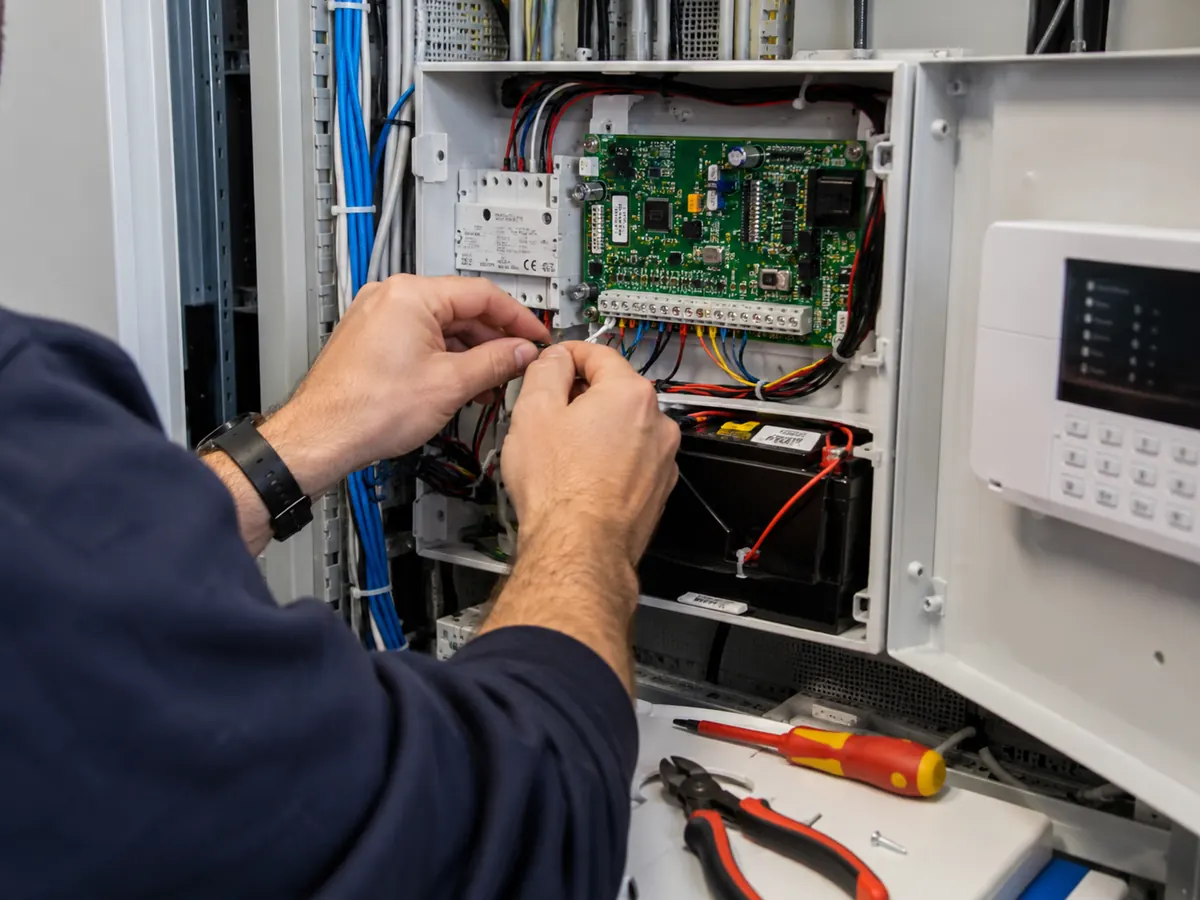

Since 1989
Experience in security systems
Assigned technician
Follow-up and maintenance

GSM / LAN
Dual communication path

Remote management
Control and alerts from your phone
What the grade of an alarm means
The European standard UNE-EN 50131 classifies intrusion alarm systems into four grades, from 1 to 4. Each grade is associated with a risk level and an intruder profile: the higher the grade, the more knowledge and tools the person trying to get in or disable the system is assumed to have, and the more demanding the requirements that the control panel, detectors and communications must meet.
In Spain, Order INT/316/2011 on the operation of alarm systems in the field of private security takes this classification as its reference. That is why the grade is not a commercial label: it determines which components can be installed and how they must behave.
Grade 1: low risk
Designed for low risks and an intruder with little knowledge. It usually corresponds to simple kits and systems not connected to a receiving centre. It cannot be used in installations that connect to an ARC.
Grade 2: low to medium risk
This is the usual level for homes, flats, villas, offices and shops without special obligations. It assumes an intruder with some knowledge and basic tools, and requires tamper protection, event logging and supervised communications.
Grades 3 and 4: medium-high and high risk
Grade 3 is reserved for establishments required by private security regulations or with a high level of risk, such as jewellers, financial institutions or lottery offices. Grade 4 applies to maximum-risk installations.

What the regulations require of a Grade 2 alarm
A Grade 2 system is not defined by a single device, but by the whole: control panel, detectors, keypads, sirens and communications must all be certified for at least that grade. If a single component is of a lower grade, the entire system is classified at that lower grade.
The main requirements include tamper protection against equipment being opened or pulled off the wall, supervision of devices and communication paths, event logging with date and time, and user codes with a minimum number of combinations to make them hard to guess.
Tamper protection and supervision
Equipment must raise an alert if it is opened, torn off the wall or loses communication with the control panel. In wireless devices, the system must detect interference that prevents transmission, a key issue when it comes to frequency jammers.
Communications with the receiving centre
When the alarm is connected to an ARC, transmission must be supervised so that a line failure does not go unnoticed. That is why VIAN SEGUR works with dual GSM/LAN communication: if one path fails, the other keeps sending alerts.
Who needs a Grade 2 alarm?
The short answer is almost any home or business that wants a professional alarm connected to a receiving centre. The regulations establish that systems connected to an ARC must be at least Grade 2. A Grade 1 kit may be valid for alerting the owner, but not for a security company to manage the signals.
Grade 2 adequately covers the risks of most flats, houses, villas, offices, practices, surgeries and shops that are not required to adopt special measures because of their activity.
Homes and second homes
Flats, penthouses, villas and homes left empty for long periods fit Grade 2. What matters is the design: protecting real access points, zoning properly and keeping communication with the ARC.
Shops and SMEs without special obligations
A shop, an office or a workshop usually meets Grade 2. If the activity is among the establishments that are required to, or high-value goods are handled, Grade 3 should be considered.

Indicative comparison of security grades
This table summarises the practical differences between the grades most commonly used in homes and businesses. It is a general reference: the final choice depends on the property, the activity and the applicable requirements.
Grade
Typical use
What it provides
Grade 1
Domestic alerts without ARC connection
Basic detection; not valid for systems connected to a receiving centre
Grade 2
Homes, villas, offices and shops
Tamper protection, supervision of equipment and communications, event logging and ARC connection
Grade 3
Jewellers, banks, required establishments and high risk
Higher requirements: masking detection, more demanding communications and greater resistance to sabotage
Grade 4
Maximum-risk installations
Highest level of technical requirements and resistance
Choosing a higher grade does not mean the property is better protected if the installation is poorly planned. A well-designed Grade 2 is usually more effective than a Grade 3 fitted without a preliminary study.
How VIAN SEGUR approaches a Grade 2 installation
The grade defines the minimum requirements for the equipment. Real effectiveness depends on how the system is designed, installed and maintained.
01
Property study
We review access points, windows, courtyards, terraces, garages and interior routes before choosing equipment.
02
Certified equipment
Control panel, detectors, keypads and sirens certified for Grade 2, so that the whole system keeps that level.
03
Supervised communication
ARC connection with dual GSM/LAN so that the loss of one line does not leave the alarm cut off.
04
Maintenance
An assigned technician carries out the annual review and adapts the system if the use of the property changes.
Grade 2 and ARC connection
Connection to an Alarm Receiving Centre allows signals to be handled 24 hours a day according to the agreed protocol. For this, the system must meet at least Grade 2 and allow alarms to be verified before the security forces are notified.
Grade 2 and everyday use
A Grade 2 system does not have to be complicated. With zoning, partial arming and remote management, the alarm adapts to your routine: protecting the ground floor at night, keeping a storeroom armed while people work, or checking the status from your phone.
Not sure what grade your home or business needs?
We review the property, the activity and daily use to propose the right grade and configuration, without oversizing the system.
Common mistakes when choosing an alarm grade
Buying a Grade 1 kit thinking you will connect it to a receiving centre later.
Mixing detectors of different grades: the system ends up at the grade of the lowest component.
Choosing Grade 3 by default without checking whether the activity really requires it.
Focusing only on the grade and forgetting the design: a badly placed sensor does not get better by being certified.
Relying on a single communication path without line supervision.
Not reviewing the system regularly to check that it maintains its performance.
Frequently asked questions about the Grade 2 alarm
What is a Grade 2 alarm?
It is an intrusion alarm system classified as Grade 2 under the UNE-EN 50131 standard, designed for low to medium risks. It is the usual level in homes, villas, offices and shops without special obligations.
Does an alarm connected to an ARC have to be Grade 2?
Yes. Private security regulations require systems connected to an Alarm Receiving Centre to be at least Grade 2.
What is the difference between Grade 2 and Grade 3?
Grade 3 requires higher standards, such as detection of detector masking and more robust communications. It is reserved for required establishments or those with a high level of risk.
Can a wireless alarm be Grade 2?
Yes, as long as the control panel and the wireless devices are certified for Grade 2. Among other requirements, the system must detect interference in radio communication.
Does my shop need Grade 3?
It depends on the activity. Jewellers, financial institutions and other required establishments must meet Grade 3. Most shops, offices and SMEs are covered by Grade 2.
How do I know whether my current alarm is Grade 2?
The documentation for the control panel and detectors states their certification grade. If in doubt, VIAN SEGUR can review your installation and tell you what grade it is and what would be needed to improve it.
Request a security study for your home or business
At VIAN SEGUR we review access points, communications, vulnerable areas and daily use to design a Grade 2 system, or the grade you really need, proportionate to your property.
Request a security assessment