

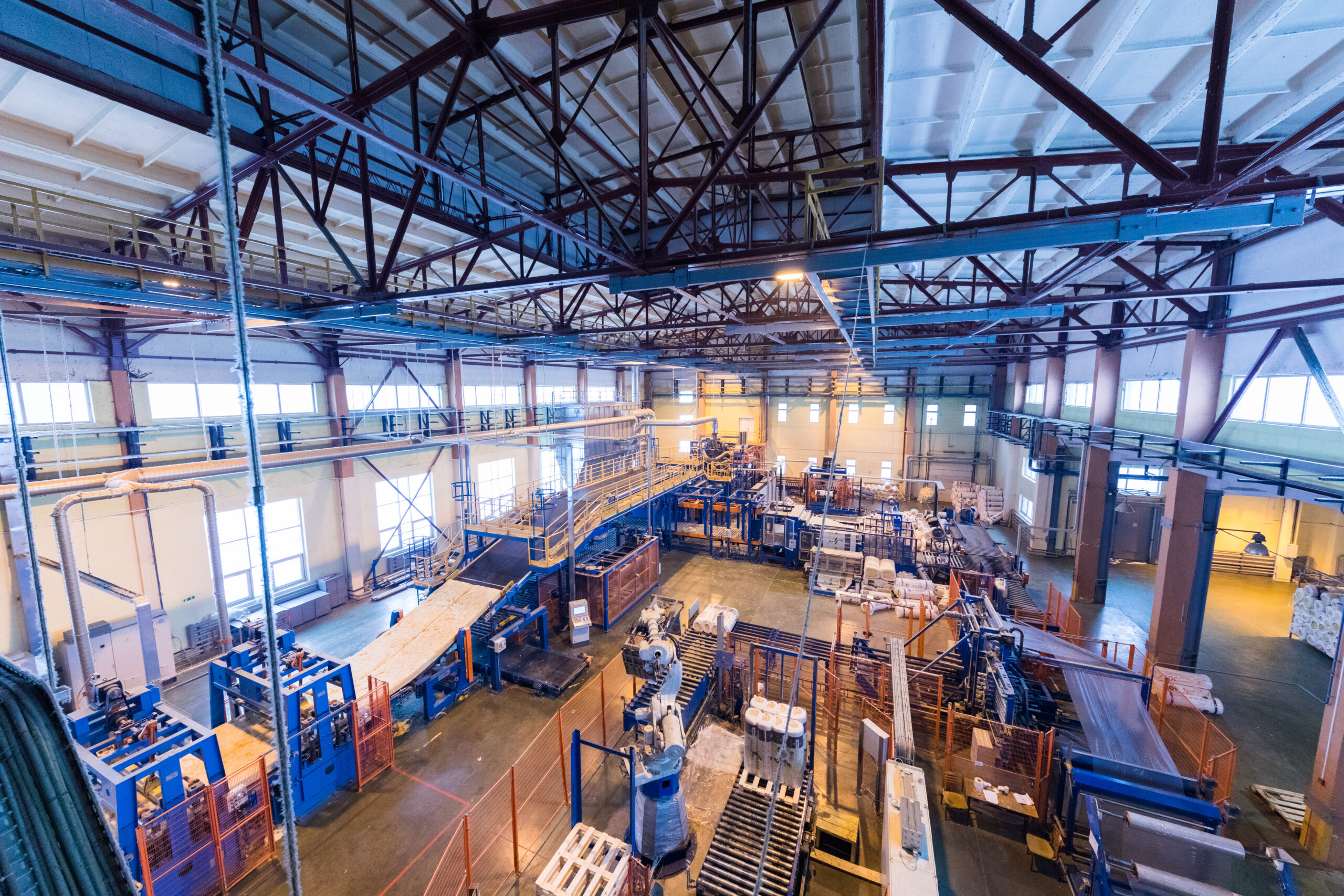

A factory alarm in Madrid should be designed around the way the industrial site actually operates rather than around a standard package. A plant may include vehicle gates, pedestrian entrances, loading bays, outside yards, warehouses, offices, technical rooms and areas that remain active after other sections have closed. Security therefore needs to be organised by zones, schedules and exposure, with communication that can still transmit events if one route fails.
Vian Segur designs alarm systems for companies in Madrid after assessing the property and its vulnerable points. In a factory, this is particularly important because the system must coexist with shifts, suppliers, goods movements and internal routes without making daily operation difficult. The objective is to protect the building and its assets while keeping the alarm practical for the people who use it.
Industrial security in Madrid: why factories need a different approach
A factory combines risks that do not usually appear together in an office or retail unit. Sites tend to be larger, several buildings may share the same perimeter and different areas may follow different schedules. During working hours there can also be regular movement from employees, transport companies, maintenance teams and contractors, so detection has to be configured accurately.
Industrial facilities in Madrid can be located in business parks, logistics areas or stand-alone compounds with vehicle traffic, manoeuvring yards and secondary entrances. The location alone does not define the security system, but it affects how the perimeter, communications, external visibility and periods of low occupancy should be assessed.
Large perimeters and entrances away from the main building
Where a factory has its own plot, the first security layer may be the fence, gate or external approach rather than the door of the building. Detecting unusual movement before somebody reaches the facility provides additional reaction time and helps concentrate protection on the routes that matter. A perimeter alarm can be considered for these projects and integrated with internal detection.
External protection must reflect the normal use of the site. A yard that is empty overnight should not be configured in the same way as an access road used by lorries during a night shift. The design should distinguish authorised routes, doors that remain operational and areas that can be armed while the rest of the plant continues working.
Loading bays, industrial doors and goods movements
Loading bays and large vehicle doors need specific attention because they concentrate opening, closing and transport activity. During normal operation they are expected movement points; outside the planned schedule they become priority access points. Zoning allows the system to reflect that change without forcing the whole factory to be armed or disarmed at the same time.
Secondary doors, links between warehouses, emergency exits and rarely used technical entrances should also be reviewed. Less visible points are the ones most likely to be missed by a generic solution. The site survey should therefore follow real staff routes and identify which openings remain exposed at each time of day.
Shift patterns and areas with different access requirements
Factories operating more than one shift often have active and inactive areas at the same time. Administrative offices, a particular warehouse or a technical room may need protection while production continues elsewhere. Dividing the alarm into areas makes partial arming possible and avoids treating the entire site as one space.
The configuration also needs to be easy for users to understand. As the installation grows, clear opening, closing and incident procedures become more important. A technically capable alarm loses value if day-to-day use is confusing or encourages staff to leave unnecessary areas disarmed.
What should be assessed before installing a factory security system
Before selecting detectors, cameras or communication routes, the site should be mapped according to its actual risk. Floor area is only one variable. The number of entrances, outdoor yards, schedules, value of equipment or stock, distance between buildings and periods without staff can all change the appropriate design.
This avoids two common mistakes: installing a large number of devices without a clear purpose, or concentrating protection around the main entrance while secondary points remain exposed. Each component should respond to a specific scenario and make it possible to identify where an event originated.
Mapping entrances and vulnerable points
The assessment should start with pedestrian and vehicle entrances, but it should also include accessible windows, side doors, roof areas or other routes where there is a genuine exposure. Security can then be built in layers: external detection where useful, door and opening protection, internal detection and visual verification at selected critical points.
Not every entrance needs the same devices. A loading gate used repeatedly during the day may require a different configuration from a technical door that remains locked most of the time. The aim is to protect the risk without disrupting normal factory operation.
Zoning around schedules and production activity
Zoning allows the alarm to follow the company timetable. Administrative offices can be armed at the end of the office day while a production area remains active. A higher-value warehouse can also receive a different level of attention within the same site.
This structure helps staff and monitoring teams interpret events. Knowing whether a signal comes from a loading bay, technical room or interior corridor provides useful context. When CCTV is available at the right points, visual information can add another layer of verification.
Communication resilience
Detection is only useful if the system can transmit its events. Vian Segur states that its systems use dual communication, with independent routes intended to maintain transmission when one route fails. This redundancy can be particularly valuable on industrial sites because of their size and long periods of reduced occupancy.
Communication can use LAN and GSM depending on the project. LAN uses the property network, while the mobile route can provide an alternative if the main connection is affected. The exact arrangement should be checked during the technical survey so it matches the infrastructure available at the factory.
Security components that can be combined on an industrial site
The right combination depends on the building and the business activity. A factory alarm in Madrid may use a relatively simple architecture in a compact industrial unit or several layers in a larger compound with yards, separate warehouses, loading docks and technical areas. Each component should have a defined role within the overall system.
Perimeter detection for earlier warning
On sites with outside land, perimeter detection can provide an alert before an intruder reaches the building. It is useful around less visible facades, rear doors and isolated areas that are empty outside working hours. Outdoor equipment has to be planned for the environment because an unsuitable configuration may produce alerts from normal movement around the site.
Perimeter protection is most useful when linked to the rest of the alarm. An external event can be associated with cameras or a second internal detection zone, creating a more complete sequence than relying on a single isolated barrier.
Wired alarms for stable industrial installations
Wired alarm systems can be particularly suitable where cable routes can be planned or existing containment can be used. On a factory site, this can provide a stable solution in fixed areas and support an installation intended to remain in service for many years.
The entire project does not have to use one technology. Depending on the building, a wired, wireless or mixed design can be considered. The choice should be based on distances, layout, available building work and required reliability rather than on a generic preference for one type of device.
Dual communication and Alarm Receiving Centre monitoring
Connection to an Alarm Receiving Centre (ARC) adds professional monitoring when the factory is closed or operating with a reduced workforce. When an alarm signal is generated, the centre receives the information and applies the relevant procedure. For industrial premises containing machinery, materials or valuable stock, this means the system does not depend only on somebody noticing a personal notification.
Dual communication strengthens this layer by reducing the risk that a single internet problem prevents event transmission. Vian Segur combines communication and central monitoring within its professional solutions for businesses in Madrid.
CCTV for access supervision and visual verification
CCTV cameras can support alarm detection at entrances, yards, loading docks, warehouses or other sensitive routes. Their purpose is not to place cameras everywhere, but to obtain useful images for supervision and for understanding what is happening when an event occurs.
Camera positions should be planned to avoid ineffective angles and must comply with applicable privacy and data-protection requirements. In a workplace environment, it is particularly important to limit recording to legitimate security purposes and to design the system professionally.
Security fog for selected high-value areas
A security fog system may be considered for selected spaces containing higher-value assets. When activated under the designed conditions, it rapidly reduces visibility and can make it harder for an intruder to reach stock or equipment. It is generally more appropriate for specific rooms or areas than for indiscriminate coverage of an entire plant.
Before installation, the volume of the space, normal activity and coordination with other procedures should be reviewed. In an industrial environment, active security measures need to be integrated into clear internal routines so they do not conflict with operations or other safety protocols.
When should a factory consider a Grade 3 alarm?
A factory does not automatically require a Grade 3 alarm simply because it is an industrial facility. Grade 3 is associated with premises or activities that are subject to higher security requirements or particular risk conditions. The decision therefore has to follow a review of the specific activity and applicable obligations.
Where Grade 3 is required, a Grade 3 alarm must meet specific technical requirements, use central monitoring and include resilient communication. Vian Segur works with systems adapted to these requirements and can assess whether the factory activity calls for this level or whether another professional configuration is appropriate.
Comparison of security solutions for a factory in Madrid
The table below summarises the role of the main solutions that may be considered in an industrial project. It does not mean that every factory needs all of them. The final combination should follow the site survey, operating model and areas of greatest exposure.
| Solution | Where it adds value | Primary role |
|---|---|---|
| Perimeter protection | Fences, yards, external entrances and approach routes | Detect activity before the building is reached |
| Internal detection | Production buildings, corridors, offices, warehouses and technical rooms | Identify movement or access inside the premises |
| Dual LAN/GSM communication | Whole installation | Maintain transmission if one communication route fails |
| ARC monitoring | Factories with closed periods, reduced shifts or valuable assets | Provide professional monitoring of events |
| CCTV | Entrances, docks, yards and critical areas | Support supervision and visual verification |
| Wired alarm | Stable areas with suitable infrastructure | Provide a robust physical architecture |
| Security fog | Selected spaces with high-value assets | Reduce visibility and hinder rapid theft |
| Grade 3 | Activities or premises subject to specific requirements | Meet a higher security level where required |
How to reduce false alarms in an industrial environment
Factories contain more sources of movement than conventional premises: machinery, large doors, air currents, vehicles, cleaning teams, maintenance staff and changing working hours. Reducing false alarms therefore starts with system design rather than only with adjustments after installation.
Detectors should be placed where they can interpret the space correctly, and external areas should be configured around the real environment. Arming schedules also need to match actual operations, because many user-generated incidents occur when an area is secured before work has fully finished.
Separate active areas from sections that have already closed
Partial arming is particularly useful on industrial sites. Offices can remain protected while production continues, a warehouse can be closed before the rest of the building, or the perimeter can stay active while authorised staff are still inside. This extends protection without forcing the whole factory onto one schedule.
Review the system when the factory layout changes
Industrial premises evolve. Warehouses are reorganised, new shelving is installed, routes change and equipment may affect the view of sensors or cameras. Maintenance should therefore check not only whether devices operate, but also whether they remain in useful positions and whether the configuration still reflects the current site.
Managing the alarm across shifts, shutdowns and weekends
A practical configuration should follow the factory calendar. On working days there may be activity from early morning until late evening; at weekends or on public holidays the entire site may be empty. The system should provide clear routines for each scenario and maintain communication with the ARC whenever zones are armed.
Different users and responsibilities may also need to be considered. The goal is not to make access complicated, but to avoid requiring somebody to disarm areas they do not need to use. Correct planning reduces mistakes and keeps more of the site protected for longer.
Partial arming by building or operational area
Where a compound includes several units, separate offices or independent warehouses, area-based control can match the schedule of each section. One zone may remain fully protected over the weekend while another is used by a maintenance shift. This is more effective than treating the entire site as one room.
Simple opening and closing procedures
Daily security depends on staff knowing what to do. It is useful to define who opens, who closes, which zones should be checked and how an incident is reported. During commissioning, testing and explaining the system are as important as the physical installation of sensors and communication devices.
Installing and maintaining industrial security systems in Madrid
Installation should begin with a technical visit covering distances, entrances, communications, internal layout and possible cable routes. This information is then used to plan equipment positions and how different zones interact. On larger projects, this stage reduces improvisation during installation and helps prepare for future expansion.
After installation, detectors, communications, signals to the monitoring centre, cameras and partial arming should be tested. Checks should include realistic opening and closing scenarios and a failure of one communication route so the system can be confirmed to operate as designed.
Ongoing maintenance helps identify coverage issues, infrastructure changes or devices that require attention. CCTV systems also benefit from checks of cameras, recorders and connections. Because factory layouts can change regularly, periodic review helps keep the security system aligned with the current site rather than the original floor plan.
Why choose Vian Segur for factory security in Madrid
Vian Segur has worked with security systems since 1989 and designs installations around the property. For a factory in Madrid, this means starting with entrances, operations and vulnerable points rather than applying the same package used for every business.
- Initial assessment of the site and its critical areas.
- Professional systems connected to an Alarm Receiving Centre.
- Dual communication to improve transmission resilience.
- Ability to integrate perimeter protection, CCTV and wired alarms.
- Security fog or Grade 3 solutions where the activity and security level justify them.
- Area-based configuration to match working hours and shifts.
You can review Vian Segur’s alarm systems or request an assessment to define which combination best fits the size, use and access points of your industrial facility.
Frequently asked questions about factory alarm systems in Madrid
What is the best alarm system for a factory?
There is no single configuration for every site. The best solution depends on the size of the premises, number of entrances, working hours, external areas, asset value and industrial activity. A compact unit may need a straightforward system, while a multi-building compound may benefit from internal detection, perimeter protection, CCTV and resilient communication.
How much does a factory alarm cost in Madrid?
The cost depends on the number of zones, detectors, cameras, communication routes, cabling and monitoring services required. Giving a fixed figure without reviewing the premises can result in unnecessary equipment or exposed areas. A site survey is the appropriate way to prepare a proposal for the actual facility.
Does every factory need Grade 3 security?
No. Grade 3 applies to particular premises or activities and is not automatically required because the property is a factory. The applicable requirements and circumstances of the site should be reviewed before selecting the security grade.
Can the outside area be protected before an intruder reaches the building?
Yes. Where the plot and environment are suitable, perimeter detection can identify presence or attempted access before the building is reached. The design should reflect fences, gates, routes and normal activity to reduce unwanted alarms.
What happens if the internet connection fails?
Dual communication provides an alternative route if one connection stops working. Vian Segur uses independent communication options such as LAN and GSM to improve continuity of alarm events and other notifications.
Is CCTV useful together with an industrial alarm?
It can be very useful at entrances, loading docks, yards and sensitive areas because it adds supervision and visual information. The need and number of cameras should be based on the points that need coverage and the installation must comply with privacy and data-protection rules.
Is a wired alarm better than a wireless system for a factory?
It depends on the infrastructure. Where cable routes are available or can be planned, a wired system can provide strong stability. Other zones may be more practical with wireless equipment or a mixed design. Distances, available building work and the requirements of each area should guide the choice.
How can I request a security survey for an industrial site in Madrid?
Vian Segur can review the factory layout, entrances, perimeter, schedules and communication infrastructure. From that information, a tailored proposal can be prepared and the need for ARC monitoring, dual communication, CCTV, perimeter detection, wired alarms or other specific solutions can be assessed.