

A cafe alarm system in Madrid has to protect the premises when they are closed while still fitting a business that opens early, receives a constant flow of customers and combines public areas with staff-only, storage and service spaces. The front door, closing shutters, till area, rear entrances and supplier access points do not present the same risk and should not all be treated in the same way. A professional installation therefore starts with the actual use of the café rather than a generic kit. VIAN SEGUR designs systems after assessing access points, layout and exposure, with CRA monitoring, dual-path communication and the option to integrate CCTV or additional security measures where they genuinely add value.
What a café needs to protect beyond the main entrance
Cafés often concentrate a great deal of activity in a relatively small space. During opening hours there are customers, employees, couriers and suppliers; after closing, the same premises may remain unattended for hours while containing equipment, stock and sometimes cash. Security should account for both situations and focus on the points that could be used to enter the premises or reach restricted areas.
A preliminary assessment helps determine which zones need permanent protection, which ones should be armed outside opening hours and which areas should be separated to make opening, closing and cleaning routines easier. The aim is not to install the largest possible number of devices, but to place the right ones where they provide meaningful coverage.
Entrance, shopfront and closing points
Street-level cafés usually have a highly visible façade and a main entrance that is used continuously. The door, shutters and glazed areas should be assessed together, especially when the café is empty at night. Opening detection and interior intrusion detection can generate an alert if unauthorised access occurs, while visible security elements also provide a useful deterrent effect.
Till, POS and payment area
The till area concentrates payment activity and can be particularly sensitive during opening, closing and quieter periods. The system should protect access to the premises and the routes leading towards this area without interfering with customer service. Rather than treating the till as an isolated point, it is more effective to include it within a zoned design covering the entrance, counter, storage and private areas.
Storage, office and service areas
Coffee, drinks, dry goods, equipment, documents and other materials are often kept in rooms customers do not see. These spaces may connect to internal corridors, service doors or secondary entrances. Protecting them as separate zones can improve system control and make it possible to keep specific areas armed while another part of the café is still being used.
Rear doors and supplier access
Many cafés receive deliveries before opening or use a separate door for waste, loading or supplies. These secondary access points can easily be overlooked if the system is designed only around the shopfront. Reviewing delivery times, frequency of use and supplier routes helps determine which detectors are appropriate and how the alarm should be configured to reduce mistakes during normal operations.
Designing café security around daily operations
When choosing a cafe alarm system in Madrid, security must remain practical during the busiest moments of the day. If arming, disarming or separating areas is confusing, user errors become more likely. The system should therefore reflect actual staff shifts, early openings and staggered closing procedures that are common in hospitality.
A zoned configuration may, for example, keep a storage room protected while the customer area remains open, or maintain certain access points armed during internal tasks. Remote mobile management, which VIAN SEGUR includes among the capabilities presented on its website, also gives the person responsible a practical way to check system status when they are not physically at the café.
Connection to a Central Receiving Station (CRA)
A cafe alarm system in Madrid connected to a Central Receiving Station can provide professional monitoring. When an alarm is connected to a Central Receiving Station, incoming signals can be handled according to the applicable verification and response procedures. For a café that remains closed overnight or on specific days, professional monitoring adds an important layer beyond a system that only sounds a local siren. The connection should be part of a properly installed and configured alarm with sufficient detectors and reliable communications.
Dual GSM and LAN communication
VIAN SEGUR states that its alarm systems use dual GSM/LAN communication. One path uses the mobile network and the other connects to the router by cable. If the internet fails or one communication route becomes unavailable, a second channel reduces the risk of leaving the alarm unable to transmit. This continuity is especially useful when the business is closed and nobody is on site to check what is happening.
Wired alarms for stable commercial installations
In a café undergoing refurbishment, a new opening or a premises where cabling can be integrated cleanly, a wired alarm may provide a particularly stable solution. VIAN SEGUR works with fully or partially wired installations, allowing the project to match the existing layout. The decision should consider building work, available routes for cables, future extensions and the planned location of detectors and control devices.
CCTV in cafés: useful verification with privacy in mind
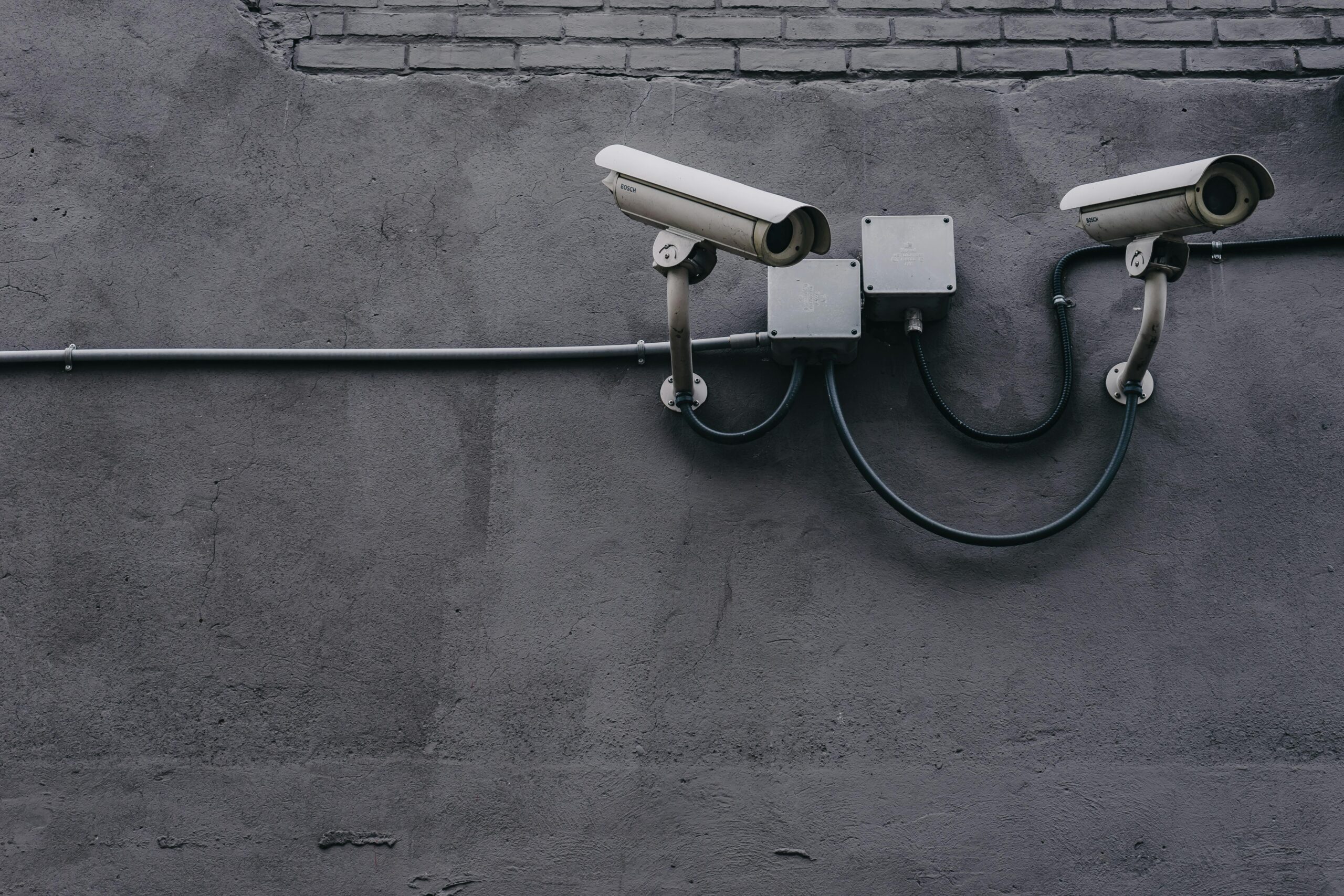
CCTV can complement an alarm by covering entrances, the till area, circulation routes or service spaces where recording is justified for security. Its value does not come from filming the entire premises without limits, but from producing useful images for supervision and verification as part of a well-planned security system. VIAN SEGUR offers CCTV design, installation and maintenance and studies camera positions according to the characteristics of each space.
The Spanish Data Protection Agency (AEPD) stresses the principle of data minimisation. In public-facing establishments, visible notices must inform people about video surveillance, cameras should capture only what is necessary, and bathrooms, changing rooms or similar private spaces must not be recorded. Public streets should only appear to the minimum extent strictly necessary to cover an access point.
Where cameras usually provide the most value
In a café, cameras may be justified at the main entrance, a secondary door, the immediate surroundings of the till or corridors leading to storage areas, provided the field of view is proportionate. Recording monitors should not be openly visible to customers. If cameras are also intended for employee monitoring, the purpose changes and the business must comply with the corresponding employment and data-protection information requirements.
Signage and image processing
Before video surveillance goes live, the business should identify the data controller, display the required video-surveillance notice and make the rest of the RGPD information available. The AEPD provides specific guidance and models for establishments. Including these requirements at the design stage prevents CCTV from being treated as a purely technical matter and helps the installation remain useful from a compliance perspective as well.
Which alarm grade does a café usually require?
Not every commercial activity requires the same security grade. Spanish Order INT/316/2011 classifies Grade 2 as the level intended, among others, for small establishments, shops and general commercial premises that are connected to a central receiving station. Grade 3 applies to establishments that are legally required to implement enhanced security measures and to other commercial or industrial sites where their activity or circumstances demand a higher level.
Being a café therefore does not automatically mean that a Grade 3 system is required. The correct level depends on the specific activity, the requirements that apply to the establishment and its actual risk. VIAN SEGUR also provides Grade 3 solutions for cases where that level is necessary.
Additional solutions that may strengthen the premises
A compact café may be adequately protected with a relatively straightforward combination of intrusion detection, communications and CCTV. Other premises, however, may have a private patio, an independent store room, access through another building, more than one floor or assets that justify additional measures. In those cases, extra security should only be added when it responds to a real risk.
Perimeter protection for private outdoor areas
Perimeter alarms are designed to detect an approach or access attempt before an intruder reaches the interior. For cafés with a private patio, enclosed yard or other private outdoor area, perimeter detection can be considered as an additional layer. Detector location and sensitivity need to match the environment so that plants, animals or normal movement do not generate avoidable false alarms.
Security fog for rapid-intrusion scenarios
Security fog can be useful where a stronger active deterrent is needed. After a valid alarm activation, the fog rapidly reduces visibility and makes it harder for an intruder to move or identify assets. It is not something every café needs, but it may be worth assessing where valuable equipment or other sensitive assets create a higher risk. VIAN SEGUR can integrate fog systems with alarms and CCTV where appropriate.
Table: what to protect in each area of a café
The table below summarises common design considerations. It does not replace a technical assessment because layout, access points and operating hours vary from one café to another.
| Area | Typical risk | Measures to consider | Related solution |
|---|---|---|---|
| Entrance and shopfront | Forced access outside opening hours | Opening detection, interior detection and visible security | Business alarms |
| Till and counter | Access to payment area and equipment | Interior coverage and proportionate CCTV | CCTV cameras |
| Storage | Stock, equipment and restricted access | Independent zoning and detection | Wired alarms |
| Service door | Secondary access or delivery mistakes | Opening detector and arming control | Dual GSM/LAN |
| Private patio | Approach from outside | Early detection where practical | Perimeter alarm |
| Sensitive asset area | Rapid intrusion | Security fog if risk justifies it | Fog alarm |
Common mistakes when securing hospitality premises
Even high-quality equipment can underperform if the system does not match the way the café actually operates. Opening, cleaning, deliveries and closing procedures should all be considered from the start.
- Protecting only the main door and overlooking rear or supplier entrances.
- Using cameras with a wider field of view than necessary or without the required video-surveillance information.
- Failing to separate storage, customer areas and service zones where partial arming would be useful.
- Relying on a single communication path for alarm transmission.
- Positioning detectors without considering machinery, airflow, high-traffic doors or staff routes.
- Choosing Grade 3 simply because it sounds more secure without checking whether it is needed, or using a lower level where a specific obligation applies.
- Failing to schedule maintenance of detectors, communications and CCTV equipment.
Maintenance and reviews for reliable protection after closing
A cafe alarm system in Madrid needs regular attention to remain reliable over time. A professional installation should be reviewed periodically. Detectors, batteries, communications, cameras, recorders and network connections can all be affected by refurbishment, furniture changes or technical incidents. VIAN SEGUR highlights ongoing CCTV maintenance on its website and recommends periodic checks to keep systems operating correctly.
For a café, the alarm should also be reviewed when the counter is redesigned, a new storage room is created, a door is replaced or the premises are extended. A detector that once covered the correct route may no longer provide the same coverage after a refurbishment. Security should evolve with the business rather than remain fixed indefinitely.
Why plan the installation with VIAN SEGUR
When planning a cafe alarm system in Madrid, the starting point should be the actual layout and operating routine. VIAN SEGUR has worked in security systems since 1989 and approaches installations after assessing the needs of the property. For a café, this makes it possible to combine access protection, interior detection, CRA connection, dual GSM/LAN communication and CCTV without turning the alarm into a generic system that is awkward to use.
The proposal can also include wired alarms, perimeter protection, security fog or Grade 3 where the assessment supports it. The key is to define what the premises genuinely need, how staff will operate the system each day and which zones should remain protected during opening, closing, deliveries or periods with no activity.
Security assessment for a café in Madrid
Before preparing a proposal, it is useful to review the shopfront, doors, accessible windows, till area, storage, supplier routes, opening hours and available communications. This assessment determines how many devices are required, where they should be placed and how arming zones can be organised so that staff can use the system easily.
You can review VIAN SEGUR’s business alarm solutions in Madrid and request a call through the Te llamamos page. The proposal is adapted to the establishment and avoids adding equipment that does not provide genuine security value.
Frequently asked questions about café alarms in Madrid
What is the best alarm system for a café?
The best option is the one that matches the access points, layout, opening hours and sensitive areas of the premises. In many cases, intrusion detection, CRA monitoring, dual communication and CCTV at justified points work well together.
Does a café have to use a Grade 3 alarm?
Not simply because it is a café. Under Spanish regulations, small establishments and general shops connected to a central receiving station are normally classified as Grade 2. Grade 3 applies when the activity or specific circumstances create a legal requirement for enhanced measures.
Can cameras be installed facing the entrance?
Yes, provided there is a legitimate security purpose and data-protection rules are respected. Public-street capture should be minimised, visible signage is required and cameras must not be placed in areas with a heightened expectation of privacy, such as bathrooms or changing rooms.
What happens if the internet connection fails?
Dual GSM/LAN communication reduces dependence on a single connection. If one route fails, the other may maintain alarm transmission, subject to the configuration and coverage available at the premises.
Can only the storage area remain armed while the café is open?
A zoned configuration can be designed where the system and operating routine allow it. Separating storage, access points and customer areas can make it easier to adapt security to different times of day.
Is security fog recommended for cafés?
It depends on the risk and the assets being protected. Fog can be valuable in rapid-intrusion scenarios or where sensitive equipment is present, but it should follow an assessment rather than be treated as a standard requirement for every café.