

Alarm with monthly fees or without: which option suits you
Comparing an alarm with monthly fees vs an alarm without monthly fees is not just a matter of comparing a monthly payment with a one-off payment. The real difference lies in who handles the alerts, who maintains the system, who owns the equipment and what happens if you want to change provider. In this guide we explain what each model includes, its pros and cons, and how to decide based on your home or business.
VIAN SEGUR Guide · Comparison
Before looking at the fee, ask yourself who is going to respond to your alarm
An alarm without monthly fees usually only alerts the user. An alarm with a fee usually includes connection to a receiving centre, maintenance and support. What matters is that what you pay matches the level of protection you need.
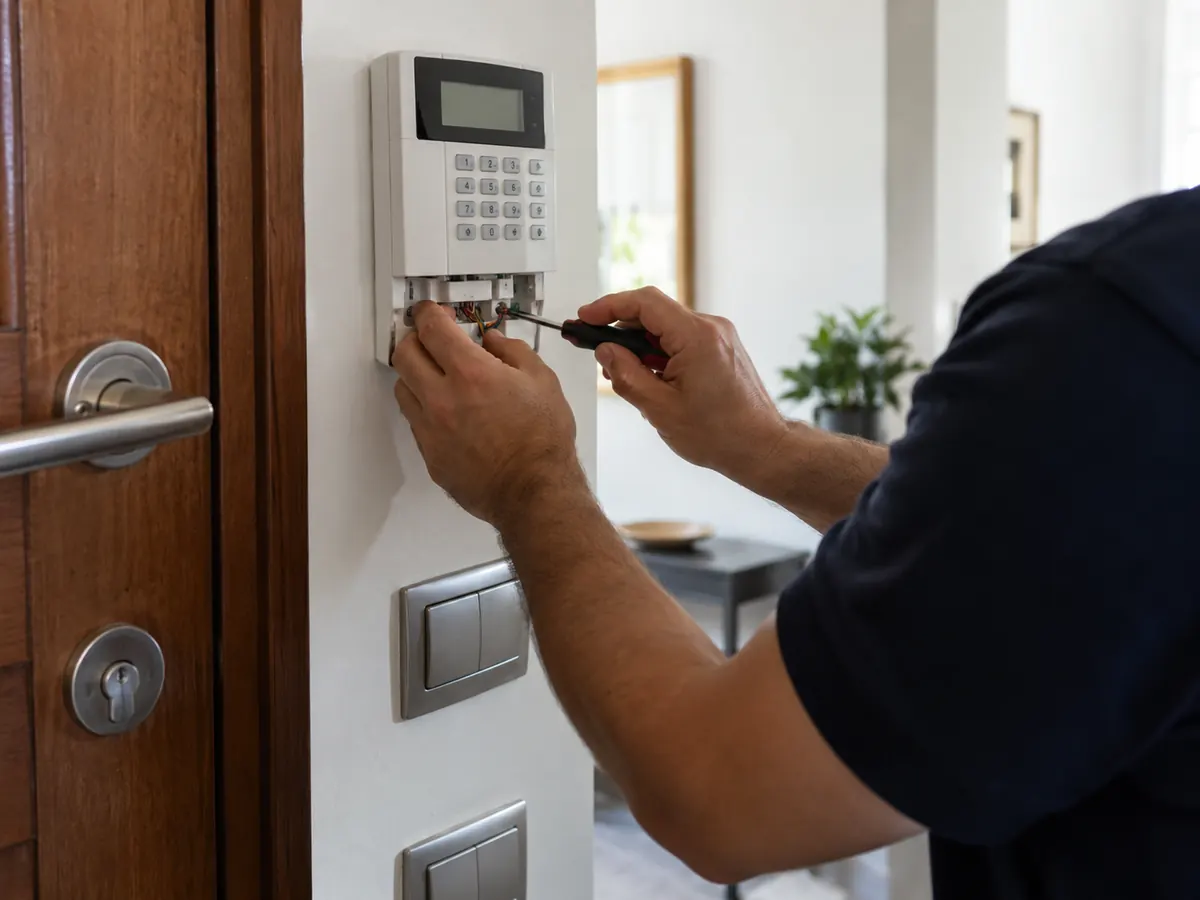

Since 1989
Experience in security systems
Assigned technician
Follow-up and maintenance

GSM / LAN
Dual communication path

Remote management
Control and alerts from your phone
What each model means
There are two ways of getting an alarm on the market. With a fee-based alarm, you pay a regular amount that normally includes connection to an Alarm Receiving Centre (ARC), maintenance and, depending on the contract, use of the equipment.
With a fee-free alarm, the user buys the equipment and manages the alerts themselves, normally from a mobile app. There are also in-between options: buying the equipment and contracting the ARC connection or maintenance separately.
Alarm with monthly fees
It usually includes 24-hour ARC monitoring, alert verification, police notification and maintenance. It is worth checking the minimum term and who owns the equipment.
Alarm without monthly fees
The user buys the equipment and receives alerts on their phone. There is no regular payment, but nobody responds to the alarm if the user cannot.
Mixed options
Owned equipment with services contracted separately: ARC connection, maintenance or both. They let you tailor the service to each case.

Advantages and limits of an alarm without monthly fees
The main advantage of an alarm without monthly fees is that there is no regular payment. It can make sense in low-risk spaces, such as a storage room or a second home with close neighbours, or as a complement to other measures.
The limit is that the response depends on the user: if the alarm goes off in the early hours, while travelling or in a meeting, someone has to see the alert, check what is happening and call the police. In addition, many fee-free kits communicate over a single path and do not always detect sabotage or wireless signal interference.
When it may be a good fit
Low-value spaces, use as a complement, or users who can respond to alerts at all times.
What to check before buying
Equipment certification, communication paths, sabotage detection and the possibility of connecting to an ARC in the future.
What an alarm with a service fee provides
The fee mainly pays for a service: operators who handle every signal 24 hours a day, verify it and, if the intrusion is real, notify the security forces. Depending on the contract, it also covers maintenance, inspections and technical support.
For that service to work, the alarm must communicate reliably. VIAN SEGUR installs systems with dual GSM/LAN communication and an assigned technician who takes care of annual maintenance.
What it is worth asking
Contract length, minimum term, who owns the equipment, what maintenance includes and what happens if you want to cancel.
When it is the most logical option
Homes that are left empty, villas, second homes that are rarely visited and businesses that close at night or at weekends.

Comparison: alarm with monthly fees vs alarm without monthly fees
An indicative comparison of the aspects that change the most between the two models.
Aspect
Alarm with monthly fees
Alarm without monthly fees
Who handles the alerts
24-hour receiving centre
The user themselves from their phone
Police notification
Handled by the ARC once the intrusion is verified
Done by the user on their own
Maintenance
Usually included or contracted
At the user's expense
Payment
Regular, according to contract
Initial purchase of the equipment
The table is indicative: each company and each contract defines exactly what the service includes.
How to decide which model suits you
01
Assess the risk
Think about how long the property stays empty, what is inside and what access points it has.
02
Think about the response
Ask yourself who would respond to an alert at three in the morning or while you are travelling.
03
Review the contract
Check the minimum term, equipment ownership, maintenance and cancellation conditions.
04
Ask for a study
A technician can tell you what level of protection you need before you choose a model.
Unsure whether to pay a fee or buy the equipment?
We explain, with no obligation, what your home or business needs and what each option would include.
Common mistakes when comparing alarms
Comparing only the price and not the service each option includes.
Not reading the minimum term or the cancellation conditions of the contract.
Not asking who owns the equipment when the contract ends.
Choosing a fee-free kit for a property that spends a lot of time empty.
Assuming that a fee-free alarm notifies the police.
Not checking whether the system communicates over more than one path.
Frequently asked questions about alarms with and without monthly fees
What does an alarm fee normally include?
It usually includes connection to a 24-hour receiving centre, alert verification, police notification when appropriate and maintenance. It is worth reviewing each contract.
Does an alarm without monthly fees notify the police?
Not by itself. It sends the alert to the user, who has to check what is happening and call the police.
Can I connect a fee-free alarm to an ARC later on?
It depends on the equipment. Many consumer kits are not compatible. A professional system can be connected to a receiving centre when needed.
What is the minimum term in an alarm contract?
It is the minimum time you commit to keeping the service. Before signing it is worth knowing how long it lasts and what happens if you cancel early.
Which option is best for a business?
For most businesses that close at night or at weekends, an alarm connected to an ARC is the most suitable option, and in some activities it is mandatory.
How does VIAN SEGUR work?
We study each property and propose a professional system with dual communication, ARC connection when it adds value and an assigned technician for maintenance.
Get advice before choosing your alarm
At VIAN SEGUR we review your home or business and explain clearly what each option includes, so you can choose the protection you really need.
Request a security assessment