

What is an alarm receiving centre (ARC) and how does it work
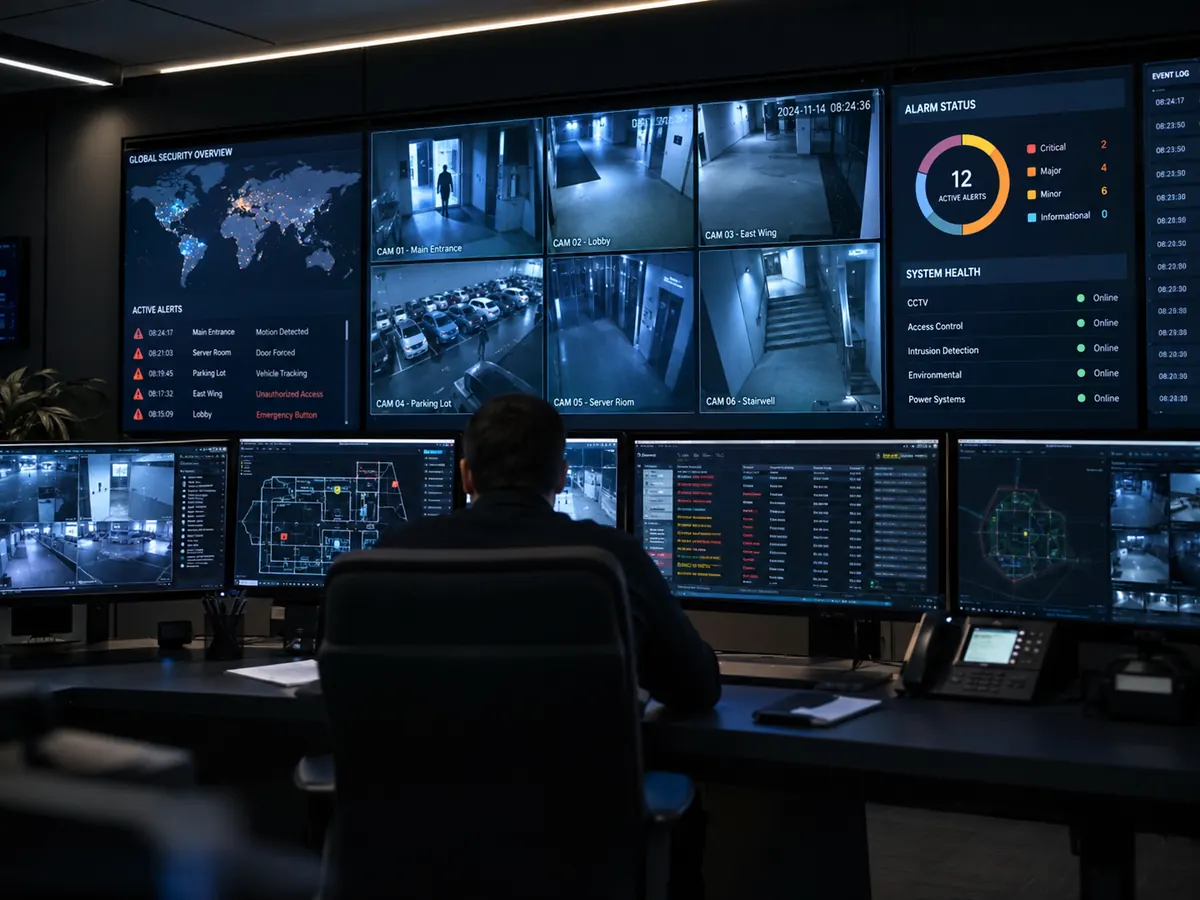
An alarm receiving centre (ARC) is a control centre, run by an authorised security company, that receives the signals sent by connected alarm systems and acts on them 24 hours a day. When an alarm goes off, someone answers it, verifies it and, if the intrusion is real, notifies the security forces. In this guide we explain how an ARC works, what happens when an alert arrives and when it is worth connecting your alarm.
VIAN SEGUR Guide · 24-hour monitoring
An alarm that sounds with nobody responding protects far less than a monitored one
The siren deters, but it does not guarantee that anyone will act. With the alarm connected to a receiving centre, every signal reaches operators who follow a protocol: they verify the alert, contact the account holder and, if appropriate, notify the police.

Since 1989
Experience in security systems
Assigned technician
Follow-up and maintenance

GSM / LAN
Dual communication path

Remote management
Control and alerts from your phone
How an alarm receiving centre works
The alarm system installed in the home or business detects an event (an intrusion, sabotage, a communication failure, a panic button press) and transmits it to the ARC over the available communication paths.
At the centre, the event appears on an operator's screen along with the customer's file: zones, contacts, keyword and agreed protocol. From there, the response depends on the type of signal and on verification.
Signal reception
The alarm sends the event over GSM, LAN or both paths. The centre receives it with the time, the zone that was triggered and the type of incident.
Verification
The operator checks whether the alarm is real: sequential detection across several zones, audio, camera images or a call to the account holder using their keyword.
Response
If the intrusion is confirmed, the centre notifies the security forces and the designated contacts. If it is a false alarm, it is logged and the customer is informed.

Why verification is the key
The police only attend with priority to verified alerts. That is why an ARC does not simply forward alarms: it has to confirm that there is a real intrusion before mobilising resources. A well-installed alarm makes that verification easier.
Verification can be sequential (several different detectors trigger within a short time), by audio or by video. With integrated CCTV cameras, the operator sees what is happening and can give the police specific information.
Sequential verification
If two or more independent detectors are triggered within a short interval, the probability of a real intrusion is high. The system is designed so that this happens along the intruder's natural routes.
Image verification
Cameras linked to the detection zones let the operator see the scene at the moment of the alert and act more quickly.
What else an ARC monitors besides intrusions
A receiving centre does not only handle burglaries. It also receives alerts for sabotage, frequency jamming, power cuts, low battery and communication failure. If the system stops communicating, the ARC detects it and activates the corresponding protocol.
For that monitoring to work, the alarm needs reliable communication. VIAN SEGUR installs systems with dual GSM/LAN communication, so that if one path fails or is attacked, the other keeps transmitting to the centre.
Regular communication tests
The system sends test signals at regular intervals. If the centre stops receiving them, it knows something is wrong even if the alarm has not gone off.
Panic and other signals
Depending on the installation, the ARC can also handle panic buttons, duress signals or technical alarms such as flooding or fire.

Alarm with ARC or without ARC: what changes
An indicative comparison between a monitored alarm and one that only alerts the user.
Aspect
Alarm without ARC
Alarm connected to an ARC
Who handles the alert
The user themselves, if they see the notification
24-hour operators following a protocol
Verification
Depends on the user checking what is happening
Sequential, audio or video by the operator
Police notification
Done by the user on their own
Handled by the centre once the intrusion is verified
Communication failures or sabotage
May go unnoticed
Detected, and a protocol is activated
The table is indicative: the specific service depends on the contract and the installed system.
How we connect an alarm to the receiving centre
01
Property study
We define zones, detectors and communication paths so that alerts are reliable and verifiable.
02
File and protocol
We agree contacts, keyword, schedules and what to do for each type of signal.
03
Communication tests
We check that the centre correctly receives the signals over each path.
04
Maintenance
An assigned technician reviews the system and keeps the protocol information up to date.
Who finds out today when your alarm goes off?
If the answer is "me, if I check my phone", we explain what connecting your system to a receiving centre brings.
Signs that your alarm needs professional monitoring
It only alerts you on your phone and you cannot always respond.
The home or business spends many hours empty.
You have a second home that you rarely visit.
Your alarm communicates over a single path.
You would not know if the alarm had stopped communicating.
Your insurer values or requires connection to a receiving centre.
Frequently asked questions about alarm receiving centres
What is an ARC?
It is an alarm receiving centre: an authorised control centre that receives the signals from connected systems and acts on them 24 hours a day according to a protocol agreed with each customer.
Does the ARC notify the police directly?
It notifies the security forces when the intrusion is verified. That is why verification by several detectors, audio or video is so important.
What happens if there is a false alarm?
The operator verifies it, contacts the account holder and, if there is no intrusion, logs it without mobilising the police.
Can I connect an alarm I already have?
It depends on the equipment. We check whether the panel is compatible and whether it meets the requirements to connect to an ARC.
What happens if the internet connection is cut?
With dual GSM/LAN communication, the alarm keeps communicating over the other path. If it stopped communicating altogether, the centre would detect it from the absence of test signals.
Is it mandatory to connect the alarm to an ARC?
For homes it is not mandatory. For certain establishments, private security regulations do require connection to a receiving centre.
Connect your alarm to a receiving centre with VIAN SEGUR
We review your system or design a new one with dual communication and verification, so that every alert reaches someone who can act.
Request a security assessment