

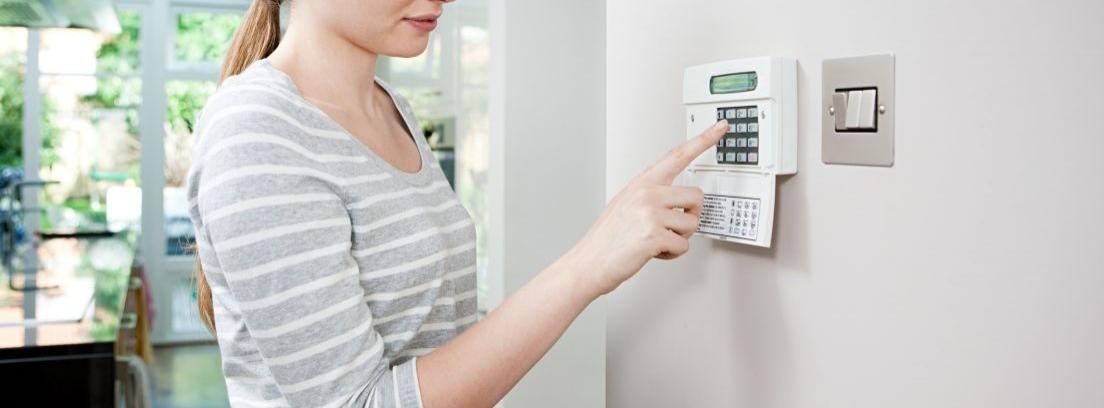
Professional alarm installation in Rivas-Vaciamadrid
Alarms in Rivas-Vaciamadrid should never mean choosing a closed package and repeating the same installation in every property. An apartment in Covibar, a ground-floor home with a terrace, a detached house in a residential area, a shop in Rivas Futura or a warehouse with several access points all have different risks and routines. Vian Segur assesses each property to define a professional, stable and practical solution with the devices and communication paths it actually needs.
Effective security begins before any detector is fitted. Doors, windows, patios, gardens, garages, storage areas, shopfronts, working hours and periods of absence must be reviewed. This assessment helps determine whether the project needs indoor detection, a wired system, dual GSM/LAN communication, connection to an Alarm Receiving Centre, perimeter protection, CCTV cameras or specific business security measures.
Alarms in Rivas-Vaciamadrid for homes, businesses and communities
Rivas-Vaciamadrid combines established residential districts, single-family homes, apartment communities with garages and storage rooms, commercial areas, offices and business premises. This variety means security should be planned according to the property rather than its floor area alone. A home may need partial night protection, while a shop must secure its frontage, till area, stockroom and entrances outside opening hours.
Vian Segur works with professional alarm systems that can be configured for homes, companies and residential communities. The aim is to provide early detection, reliable communication, organised incident management and simple day-to-day operation. The installation should protect the property without forcing users to change their routines unnecessarily.
Why every property needs a security assessment
Two properties on the same street may require different systems. Height, accessible windows, entrances from communal areas, visibility from the street, terraces, gardens, occupancy patterns and the presence of pets, employees or service staff all affect the design. A prior assessment identifies these factors before equipment is selected.
It also prevents two common problems: blind spots and oversized systems. Installing more devices does not guarantee better protection if they are badly positioned or programmed. A solution proportionate to the real risk can detect earlier, reduce false alarms and make maintenance easier throughout the life of the system.
Everyday apartments and flats
In an apartment, the main entrance is usually the first point to protect, but it is not the only one. First-floor properties, homes close to accessible roofs, flats with windows facing internal courtyards and apartments with terraces may require additional detection. Apartment alarm systems should combine security with convenient mobile arming, disarming and monitoring.
When the property remains empty for many hours, ARC connection and technical notifications become more important. It is also worth assessing whether the storage room or garage space needs independent or integrated protection, particularly when bicycles, tools, documents or other valuable items are stored there.
Ground-floor flats, penthouses and homes with terraces
Ground-floor flats and penthouses often have more exposed access points than an internal apartment. Patios, terraces, street-level windows, doors to communal areas or accessible rooftops must be included in the plan. Restricting the system to one indoor detector may mean the alarm reacts too late.
The design can combine opening contacts, indoor detection and, where the space allows, outdoor elements configured to identify an approach before entry. Placement should consider animals, vegetation, changing light and shared passage areas so the system remains stable without losing detection capability.
Detached houses, townhouses and homes with gardens
House alarm systems require the property to be assessed as a whole: plot, fencing, side entrances, front door, garage, large windows, terraces and annexes. In a single-family home, security should not begin only after someone has entered the living room; it should address the most vulnerable approach points.
A perimeter alarm can detect an intrusion attempt earlier and allow selected outdoor areas to remain protected while the family is inside. With a zoned configuration, the perimeter or specific entrances can stay armed at night without restricting normal movement through the bedrooms and living areas.
Shops, offices and customer-facing premises
A business system must reflect both access points and the activity carried out inside. A shop may need protection for windows, shutters, the till and the stockroom; an office may prioritise work areas, IT equipment, records and authorised-user management. Business alarms should match opening hours, supplier access and the areas left unattended outside the working day.
For premises with valuable stock or a risk of rapid intrusion, a security fog alarm can add an active response that severely restricts visibility and the intruder’s ability to remain on site. It must be integrated with detection and programmed for the specific space so it operates in a controlled way.
Warehouses, industrial units and business sites
Warehouses and industrial units often include vehicle doors, loading bays, secondary entrances, internal offices, technical areas and goods distributed across large surfaces. To avoid blind spots, the design must account for routes, heights, schedules, vehicle movements and possible future expansion.
When an activity is subject to specific security requirements, a Grade 3 alarm may need to be considered. Not every company requires this level. The decision must be based on applicable regulations, the actual risk and a technical assessment rather than presenting a high-security system as a generic product.
Residential communities and shared areas
In a residential community, protection may focus on entrance halls, garages, pedestrian access points, technical rooms, storage areas and locations with poor visibility. The system must coexist with residents, visitors, delivery staff and maintenance teams. It is therefore important to define which areas are monitored, who can enter and how incidents are managed.
Cameras can reinforce control, but they must be planned technically and installed in accordance with applicable privacy rules. In community projects, good design helps avoid blind spots, unnecessary recording and intrusion into private areas.
Choosing the right system for the required protection
The decision should not be reduced to comparing monthly fees or promotional offers. The property owner should first define what needs to be detected, how alerts will be transmitted and what response is expected. Alarms in Rivas-Vaciamadrid can combine several layers, from opening detection at one door to an integrated system with perimeter coverage, video surveillance and professional monitoring.
Opening and motion detection
Opening contacts identify the manipulation of doors and windows. Motion detectors confirm presence inside a protected area. Used together, they cover access points and internal routes without relying on a single detection device.
Dual GSM and LAN communication
An alarm must communicate even during a technical incident. Vian Segur states that its systems use dual communication to transmit alarms and other notifications. Combining GSM communication with LAN communication helps maintain alert transmission if one route becomes unavailable.
LAN uses a wired connection to the router, while GSM uses the mobile network. The right configuration depends on coverage, the property’s infrastructure and the required level of continuity. The aim is to prevent the system from depending on only one channel.
Connection to an Alarm Receiving Centre
ARC connection allows signals to be received and managed under professional protocols. When an intrusion or incident occurs, the centre can review the available information, contact nominated persons and coordinate the appropriate response. This monitoring is particularly valuable when a home or business remains empty for long periods.
Contact numbers and authorised users must be kept up to date. The system should also transmit technical events such as power, network or coverage failures, because identifying a communication problem early helps preserve protection.
Perimeter protection for earlier detection
Perimeter detection operates outdoors or at points before internal access. It may be appropriate for detached houses, townhouses, ground-floor homes with gardens, company yards, car parks or industrial sites with wide boundaries. Its main benefit is additional reaction time and a stronger deterrent effect.
It does not replace physical barriers or indoor detection. It works best as one layer in a wider strategy, correctly positioned and configured for the environment. Terrain, vegetation, animals and shared areas must be assessed to balance sensitivity with operational stability.
CCTV cameras for verification and control
CCTV cameras can complement an alarm by supervising entrances, interiors or perimeters and providing visual information during an incident. A camera is valuable when it covers the relevant area and delivers suitable images; an unplanned position may miss the exact point that matters.
Privacy must be respected in homes, companies and communities, and recording should be limited to permitted spaces. Professional planning considers field of view, lighting, mounting height, recording retention and integration with the rest of the security system.
Wired alarms for a stable installation
Wired alarms are a professional option where devices can be physically connected. Cabling can provide stability, reduce communication issues between components and support a system designed for long-term operation.
Not every device needs to be wired in every project. Depending on the building, a complete, partial or hybrid arrangement may offer the best balance. Existing conduits, planned refurbishments, distances and expansion needs should be reviewed before the decision is made.
Comparison table for planning the installation
| Property type | Common risks | Solutions to consider |
|---|---|---|
| Everyday apartment | Main door, accessible windows and daily absences | Opening detection, indoor sensors, ARC, remote control and dual communication |
| Ground-floor flat or penthouse | Patio, terrace, exposed windows and access from shared areas | Access protection, indoor detection and perimeter assessment |
| Detached house or townhouse | Plot, garage, large windows, garden and side entrances | Indoor alarm, perimeter, CCTV, ARC and GSM/LAN communication |
| Shop or office | Frontage, till, stockroom, records and closure outside working hours | Professional alarm, CCTV, ARC, fog where appropriate and user management |
| Warehouse or industrial unit | Vehicle doors, loading areas, goods, perimeter and multiple access points | Wired or hybrid system, CCTV, dual communication, perimeter and Grade 3 if required |
| Residential community | Garages, entrance halls, storage rooms, technical areas and shared traffic | CCTV, access control, technical alarms and preventive maintenance |
Security tailored to the districts and environments of Rivas
The municipality is organised into the West, Central and East districts, with different types of housing and activity. In areas dominated by residential buildings and communities, projects often focus on entrances, ground-floor properties, penthouses, garages and storage rooms. In zones with detached houses and residential developments, gardens, fencing, garages and side entrances become more important.
Rivas Futura and other commercial or business environments require a design based on shops, offices, storage areas, schedules and the movement of employees or suppliers. Discussing Alarms in Rivas-Vaciamadrid therefore means understanding this variety and planning a specific response instead of assuming that every property in the municipality faces the same risks.
How Vian Segur carries out a professional installation
1. Property and routine assessment
The process begins with access points, rooms, outdoor areas, schedules, authorised users and periods of absence. Internet connection, mobile coverage, electrical supply and cabling options are also checked. This information establishes priorities and identifies technical limitations before the system is designed.
2. System design and device placement
The next step defines the required detectors, cameras, sirens and communication modules. Each component must have a clear purpose. Orientation, mounting height, detection field and its relationship with doors, windows or internal routes directly affect the result.
3. Installation, programming and testing
Installation includes mounting devices, running cable where appropriate, configuring zones, users and communication paths, and testing each scenario. An alarm must be checked as a complete system: detection, signal transmission, alert reception, remote control and recovery when a route fails.
4. User guidance and maintenance
Every authorised person should know how to arm, disarm and check the alarm status. Initial guidance reduces mistakes and false alarms. Over time, maintenance checks detectors, batteries, communication, cameras and any changes to the property layout.
Vian Segur’s experience installing security systems since 1989 is reflected in an approach based on assessment, professional installation and continued support. Security does not end when the last detector is fixed in place; it must remain operational and adapt when doors, schedules, users or the use of the property change.
Good practices for stronger day-to-day protection
- Arm the alarm whenever the property is empty, even for a short absence.
- Check doors and windows before activating the system.
- Keep contact numbers, codes and authorised users up to date.
- Do not cover detectors or cameras with furniture, curtains, signs or stock.
- Report refurbishments, new access points or layout changes.
- Do not ignore repeated battery, network or coverage notifications.
- Request a review when home or business routines change.
These measures do not replace a well-designed installation, but they help preserve its effectiveness. Alarms in Rivas-Vaciamadrid perform best when technology, maintenance and daily use follow the same security approach.
Frequently asked questions about alarm systems in Rivas
What is the best alarm for a home in Rivas-Vaciamadrid?
The best alarm is one that matches the property, its access points and the time it remains occupied or empty. An apartment may need well-positioned protection for the main door, windows and circulation areas. A detached house or townhouse may also require garden, garage, side-entrance, perimeter, CCTV and dual-communication coverage.
Should the system be connected to an Alarm Receiving Centre?
Yes, particularly when continuous supervision and professional signal management are required. The ARC receives events, applies established protocols and contacts nominated persons or coordinates the appropriate response. Its value increases when the property remains empty for many hours.
What happens if the internet fails or power is cut?
A dual-communication solution reduces reliance on a single connection. Combining LAN and GSM allows another route to maintain alert transmission when one fails, depending on the installation’s technical configuration. The system should also report power, network and coverage issues.
Can part of the alarm remain armed while people are inside?
Yes. Zoned configuration can protect the perimeter, the ground floor or selected entrances while users move through other areas. This is useful at night, in homes with gardens, in businesses with restricted zones or in properties with rooms that are not being used.
Is it advisable to combine an alarm with CCTV cameras?
It may be advisable when visual verification or supervision of entrances and perimeters is needed. Cameras complement detection, but they must be positioned correctly and respect privacy. The decision depends on the property, the area to be monitored and the required security level.
Does every company need a Grade 3 alarm?
No. Grade 3 is intended for activities or installations with higher requirements and, in some cases, regulatory obligations. A professional assessment should confirm whether this level applies or whether a well-designed standard business alarm connected to an ARC meets the actual need.
How can I request a survey for Alarms in Rivas-Vaciamadrid?
Use the We’ll call you form so Vian Segur can learn about the home, business or residential community and review access points, communication options and exposure. This information is used to prepare a tailored proposal rather than applying the same package to every property.
Sorry, the comment form is closed at this time.