

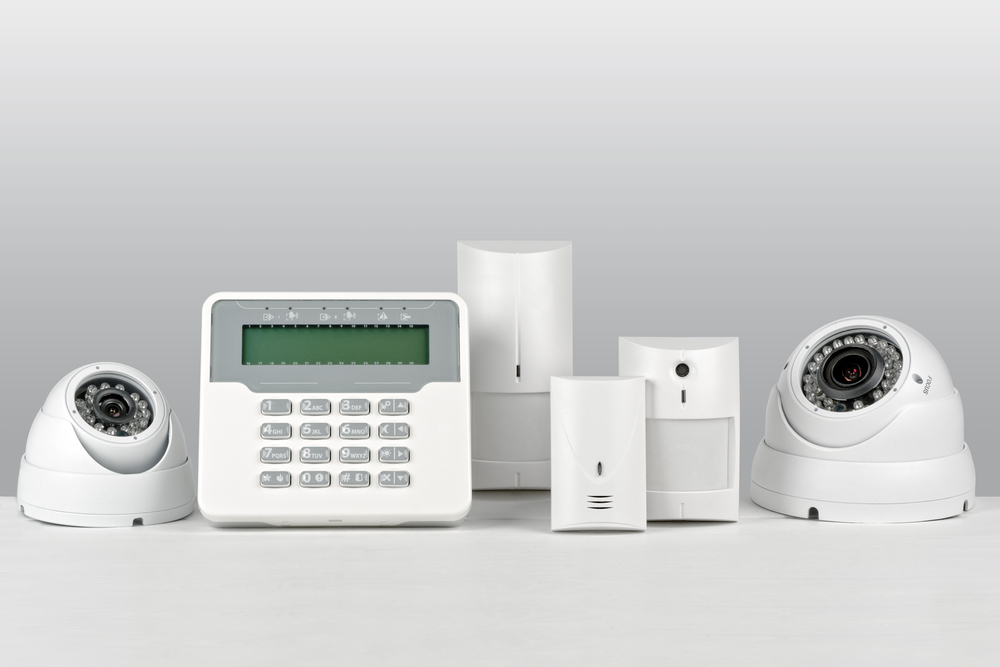
Alarms in Coslada for homes, businesses and warehouses
Alarms in Coslada should be designed around the actual characteristics of the property rather than sold as an identical package for every customer. An apartment in Valleaguado, a ground-floor home in Ciudad 70, a property near Barrio del Puerto, a shop in the town centre or a warehouse linked to the logistics sector all require different levels of detection, communication and response.
At Vian Segur, every installation starts with an assessment of access points, vulnerable areas, opening hours and daily routines. This analysis defines a professional solution that may combine indoor detection, dual communication, connection to an Alarm Receiving Centre, perimeter protection, CCTV cameras or security fog. The goal is to provide stable protection that is easy to use and ready to respond when an incident occurs.
Tailored security for properties in Coslada
Coslada includes established residential districts, buildings from different periods, homes with terraces or patios, communities with garages and storage rooms, street-level shops and significant business and logistics activity. This variety means security should be approached technically, not only by comparing the number of devices included in a standard offer.
In areas such as Coslada Pueblo, Valleaguado, La Cañada, Barrio de la Estación, Ciudad 70, La Rambla and Barrio del Puerto, there are interior apartments, ground-floor homes, penthouses and properties with more exposed access points. The probable entry route, the time the property remains empty and the way users need to arm or disarm the system are different in every case.
The installation must also adapt to shops, offices, storage facilities and warehouses near the Coslada Transport Centre and other business areas. These environments require protection for people, goods, vehicles, documents, equipment and loading zones without disrupting daily operations. A security company should therefore study the premises first and recommend the technology afterwards.
What a professional installation should assess
Before choosing sensors, cameras or communication channels, the property should be reviewed systematically. The assessment must identify main and secondary doors, accessible windows, patios, terraces, garages, entrances, shop fronts, storage areas, technical rooms and interior routes. Lighting, mobile coverage, network availability, wiring options and changes in use between daytime and night-time should also be considered.
A well-designed installation avoids blind spots and reduces false alarms. The objective is not to install more detectors, but to select the right devices, position them correctly, programme them around real routines and define what must happen when a signal is generated. This planning is particularly important when there are pets, employees on different shifts, suppliers, restricted areas or access points used only at certain times.
Alarms in Coslada must also be designed around reliable communication. A system may detect an intrusion correctly and still lose effectiveness if it cannot transmit the alert. Vian Segur therefore works with solutions that can combine LAN and GSM, together with ARC monitoring when the customer requires continuous supervision and professional event management.
Alarms in Coslada for homes and residential communities
Residential protection should match the property and the lifestyle of the people using it. A family entering and leaving several times a day needs a different configuration from a second home or a property that remains empty for long periods. The alarm must be secure but also convenient, because a complicated system is more likely to be used incorrectly or left disarmed when it is needed.
Vian Segur provides dedicated information about apartment alarms and house alarms. These solutions can be integrated with remote management, ARC connection, dual communication and video surveillance according to the access points and exposure level.
Apartments, ground floors and penthouses
In an interior apartment, the main door normally concentrates a large part of the risk, although windows facing courtyards, communal terraces or accessible areas should also be reviewed. Ground-floor and first-floor homes have greater exterior exposure and may require protection for windows, shutters, patios or secondary doors. Penthouses may have terraces or roof access points that should not be excluded from the assessment.
A typical combination may include opening detection, indoor sensors, a siren, mobile management and ARC monitoring. The configuration should support convenient entry and exit, partial night modes and clear notifications for every authorised user.
Homes with patios, gardens or several entrances
Homes with outdoor areas require earlier detection. A perimeter alarm can protect gardens, fences, walls, doors, windows and passageways before an intruder reaches the interior. Outdoor protection may remain active while the family is at home when the installation is properly divided into zones and adjusted.
Detector orientation, vegetation, animals, changing light and normal routes across the property must be considered to avoid unnecessary alerts. Perimeter detection does not replace indoor protection; both layers complement each other and provide earlier warning and better verification.
Garages, storage rooms and shared areas
In residential communities, security does not end at the apartment door. Garages, storage rooms, service rooms and communal entrances may require independent or integrated protection. The design depends on coverage, power supply, the distance to the building network and how frequently each area is used.
Cameras can help monitor entrances, ramps and circulation areas, while the alarm protects specific doors, rooms or storage units. When several owners share a system, permissions, recording retention, maintenance responsibilities and response procedures should be clearly defined.
Protection for shops, offices and logistics activity
Coslada has a strong business and logistics presence, so many installations must protect goods, vehicles, equipment, documents and staff movements. In these cases, the system has to match the operation: opening hours, shifts, deliveries, suppliers, loading areas, offices, storage zones and restricted spaces.
Business alarm systems can combine intrusion detection, cameras, remote management, redundant communication and ARC connection. The configuration should identify the exact zone that generated an event and support a fast response without obstructing normal business activity.
Street-level shops and commercial premises
A shop may include display windows, shutters, rear doors, a storage room, a cash area and high-value products. The installation must consider visible entry points as well as less obvious vulnerabilities. Opening contacts, indoor detectors, cameras covering entrances and critical zones, and a communication path that remains operational after an internet outage may all be appropriate.
Where rapid intrusion is a concern, a security fog alarm can add an active response. After a confirmed detection, the generator reduces visibility within seconds and makes it difficult for an intruder to locate goods or continue acting. It must be designed for the specific space and maintained periodically.
Offices, storage facilities and warehouses
In an office, priority areas may include entrances, individual rooms, technical spaces and locations containing documents or equipment. In a storage facility or warehouse, gates, loading bays, side access points, the perimeter, yards, vehicles and goods become more important. A single system can be divided into zones to support shifts, partial closures or areas that remain protected while others are in use.
Alarms in Coslada for these properties should provide clear information about every event. CCTV integration helps review access and movement, while dual communication reduces the risk of isolation. When the property has suitable infrastructure, a wired solution can offer strong long-term stability.
Grade 3 systems when required by the activity
Some establishments are subject to specific security requirements because of their activity or risk level. In these cases, a Grade 3 alarm may be required, using approved equipment, wired installation, anti-sabotage measures, dual communication and connection to an Alarm Receiving Centre.
Not every business needs this level. The decision should be based on the applicable regulations and a technical assessment. Vian Segur can review the activity, access points and requirements to propose a compliant solution without confusing a conventional professional installation with a mandatory higher-grade system.
Components that may form part of the system
A professional installation can combine different technologies. Not every property needs every component, but each one should have a clear purpose: detecting, communicating, verifying, deterring or simplifying day-to-day management. Overall quality depends on all elements working as one coordinated system.
Wired alarms for greater stability
Wired alarms physically connect the control panel, detectors and other devices. This configuration reduces dependence on wireless communication and is suitable for projects where long-term stability and reliability are priorities. The installation may be fully or partly wired depending on the building work, layout and technical possibilities.
Wiring should be planned so that it remains protected and as discreet as possible. In businesses, warehouses, offices or homes undergoing renovation, it creates a solid, expandable infrastructure. It can also be integrated with LAN communication, GSM backup, cameras and higher-security systems.
Dual LAN and GSM communication
Dual communication uses two independent channels to transmit alarms and technical notifications. A LAN connection uses the property network, while GSM communication uses the mobile network. If one path fails, the other can maintain transmission.
This redundancy is useful during router failures, internet outages, power incidents or attempted sabotage. It does not prevent the incident itself, but it reduces the risk of the system becoming isolated at the moment it needs to communicate.
Connection to an Alarm Receiving Centre
The ARC receives system signals and manages them in accordance with established procedures. When an event occurs, the centre can check available information, contact authorised people and coordinate the appropriate action. This supervision is valuable when the property remains empty, when responsible people are far away or when professional event management is needed outside normal hours.
For the connection to be effective, the system must be correctly programmed and contact information must remain up to date. Users should also understand codes, entry and exit delays and how to report changes to the premises.
CCTV for monitoring and visual verification
CCTV cameras can cover perimeters, entrances, garages, storage areas, shop fronts, loading zones and indoor spaces. They allow authorised users to view live images and review recordings, subject to the design and requirements applicable to each installation.
Video surveillance complements an alarm but should not automatically replace it. The alarm detects and communicates; cameras provide visual context. When both systems are integrated, it becomes easier to verify incidents and understand what is happening in a specific area.
Security fog as an active response
Security fog is suitable for spaces where a few minutes can make a major difference. After a confirmed detection, it creates a visual barrier that makes it difficult to locate products, equipment or other assets. It may be useful in shops, storage facilities, offices with sensitive equipment or individual rooms containing higher-value items.
The generator position, room volume, layout and activation procedure must be assessed carefully. The equipment also requires maintenance so it can respond when needed and integrate correctly with the rest of the installation.
Comparison of solutions by property type
| Property type | Common risks | Solutions to consider |
|---|---|---|
| Regular apartment | Main door, accessible windows and periods without occupancy | Indoor detection, remote control, ARC and dual communication |
| Ground floor or penthouse | Patios, terraces, windows and secondary access points | Opening contacts, additional sensors, CCTV and exterior reinforcement |
| Home with garden | Fences, doors, garage, large windows and passageways | Perimeter alarm, indoor detection, cameras and LAN/GSM communication |
| Retail premises | Shop front, shutters, cash area, storage and rear entrance | Wired alarm, CCTV, ARC and security fog where appropriate |
| Office | Entrances, rooms, technical areas and documents | Zoning, remote management, cameras and dual communication |
| Storage facility or warehouse | Gates, loading bays, goods, vehicles and perimeter | Wired system, CCTV, perimeter protection, ARC and Grade 3 where mandatory |
How Vian Segur works from assessment to maintenance
The process begins with a visit or assessment of the property. Access points, vulnerable areas, daily use, available communications and the required protection level are reviewed. A tailored proposal then defines the necessary equipment, device positions, communication paths and possible integrations. This prevents customers from buying a system before understanding the problem it needs to solve.
Once the proposal is approved, technicians install and programme the system. Every detector should be tested, communications verified, cameras checked, users configured and operation explained. The handover should make it clear how to arm and disarm, how to use partial modes, how to respond to notifications and who to contact if an issue arises.
Vian Segur has installed security systems since 1989 and approaches protection as an ongoing service. Maintenance checks sensors, batteries, wiring, communications, sirens, cameras and programming. It also allows the system to be adapted when doors, windows, schedules, staff, layout or customer needs change.
Common mistakes when choosing a security system
The first mistake is comparing only price or sensor quantity. Two installations with the same number of devices can perform very differently when one has been properly assessed and the other leaves access points uncovered. It is also a mistake to choose the technology before checking coverage, network availability, wiring options and daily use.
Another frequent problem is relying on a single communication path. If the system only uses internet and a failure occurs, its ability to transmit alerts may be reduced. Dual communication adds backup and should be considered especially for businesses, empty homes and premises containing valuable assets.
An installation without maintenance or user guidance should also be avoided. False alarms often result from incorrect settings, unreported changes or a lack of understanding of entry and exit times. A professional solution should include advice, coherent programming and regular reviews that preserve reliability over time.
Finally, cameras, outdoor detectors and security fog should not be installed without a clear purpose. Every element must have a defined role within the system. With Alarms in Coslada, the design should respond to the property, the risk and the way every alert will be managed.
Request a security assessment for your property
If you are considering Alarms in Coslada for a home, residential community, shop, office, storage facility or warehouse, Vian Segur can assess the access points, schedules and protection needs and propose a professional solution. You can review the available alarm systems or leave your details on the We will call you page to receive personalised advice and a no-obligation proposal.
Frequently asked questions about security in Coslada
What is the best alarm for a home in Coslada?
The best option is the one that matches the property, its access points and the users’ routines. An interior apartment, a ground-floor home with a patio, a penthouse or a house with outdoor areas all require different configurations. A prior assessment should be completed before choosing sensors, communication, ARC monitoring and additional systems.
Is connection to an ARC recommended?
Yes, especially when a home or business remains empty for long periods, contains valuable assets or requires professional management of alerts. The Alarm Receiving Centre receives signals and acts according to the procedures established for each event.
What happens if the internet or power fails?
An installation with dual communication can continue transmitting through an alternative channel when one path fails. Combining LAN and GSM reduces the risk of isolation during network failures, power incidents or attempted sabotage, depending on the technical system configuration.
Can the alarm be controlled from a mobile phone?
Yes. Remote management allows authorised users to arm and disarm the system, review events and receive notifications. Where cameras are integrated, it may also support live viewing or access to recordings according to the installed configuration.
Do cameras replace an alarm system?
Not necessarily. Cameras provide monitoring and visual verification, while the alarm detects, communicates and activates procedures. In many properties, the strongest approach is to integrate both systems so they work together.
When might a Grade 3 alarm be required?
It may be mandatory for certain establishments because of their activity or risk level. Grade 3 requires approved equipment and specific technical conditions. The applicable regulations and the business premises should be reviewed professionally before making a decision.
How can I request a quote for alarms in Coslada?
You can ask Vian Segur to assess your home or business through the We will call you page. With information about the property, access points, daily use and expected protection level, the team can prepare a tailored, no-obligation proposal.
Sorry, the comment form is closed at this time.