

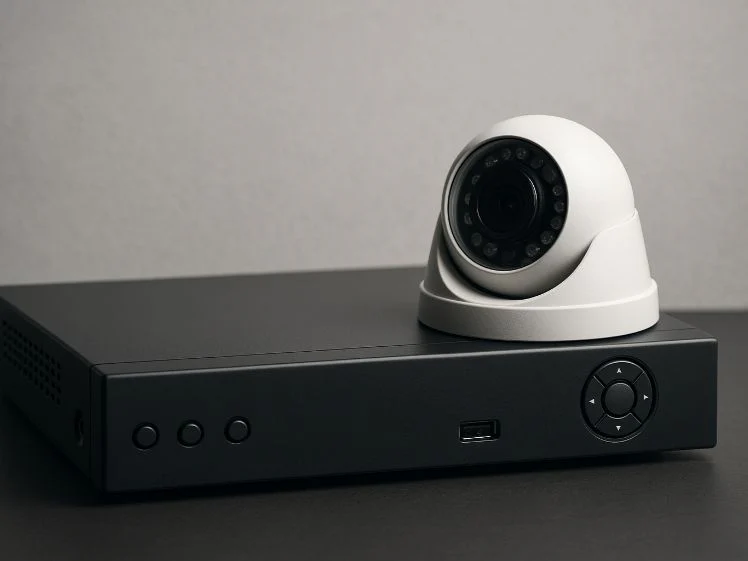
Professional alarm installation in Alcalá de Henares
Choosing Alarms in Alcalá de Henares should not mean buying a closed package with the same number of detectors for every property. A home in the historic centre, an apartment in a residential community, a detached house with outdoor space, a shop, an office or an industrial unit all have different access points, schedules and vulnerable areas. The installation should begin by understanding the property and defining what the system must detect, how it will communicate an incident and who needs to manage it.
VIAN SEGUR works with professional alarm systems designed around each property, with Alarm Receiving Centre connection, dual communication and complementary solutions such as perimeter protection, CCTV cameras or security fog. The company has installed security systems since 1989 and bases each project on a prior survey, technical placement of the devices and maintenance that helps preserve long-term reliability.
Professional Alarms in Alcalá de Henares
An effective alarm is not defined by the number of visible devices, but by the real coverage it provides. Before installation, doors, accessible windows, patios, terraces, garages, passage areas, shopfronts, storage rooms and technical spaces should be reviewed. The way the property is used also matters: a full-time home does not need the same configuration as a second residence, and a customer-facing shop is different from an office with fixed working hours.
Alcalá de Henares brings together a historic centre, residential districts, owners’ communities, shops, offices and business and industrial areas. This variety makes standard configurations particularly unsuitable. In older buildings, cable routes and device placement may require closer planning; in newer properties, existing infrastructure may be used; and in homes or premises with outdoor areas, a layered approach is often worth considering.
Professional installation also reduces common problems such as badly oriented sensors, uncovered areas, false alarms and systems that are difficult to use. The aim is for the alarm to fit the routines of the household, staff or community, rather than forcing people to change their daily life around the system.
What should be assessed before choosing a system
A prior security survey shows which elements add real protection and which would be unnecessary. It helps adapt the proposal to the building, exposure level and realistic budget, covering critical points without oversizing the installation.
Access points, layout and likely routes
The first step is to identify where unauthorised entry could occur. The main door matters, but it is not always the only weak point. Ground-floor homes, penthouses, detached houses, shops and warehouses may also require a review of windows, patios, terraces, secondary doors, shutters, loading bays, garages and low-visibility areas. This analysis determines where opening contacts, indoor detectors, outdoor sensors, cameras or sirens are useful.
Daily routines, users and empty periods
A home with children, pets or service staff needs a different setup from a property that remains empty for several days. In businesses, shifts, authorised employees, suppliers, cleaning staff and closing hours must also be considered. Zoning, user permissions and remote management make it easier for each person to use the alarm correctly without disabling areas that should remain protected.
Communication and response protocol
Detecting an intrusion is not enough if the alarm cannot transmit the signal. The design should therefore define how the system communicates, what happens if the internet fails and how alerts are handled. ARC connection and dual communication provide a more stable and professional response to incidents, technical failures or attempted sabotage.
Security solutions for different properties
The type of property determines the protection strategy. The right solution is not necessarily the most complex one; it is the system that covers actual risks and remains practical in everyday use.
Apartments, ground-floor homes and penthouses
In an internal apartment, priorities usually include the main entrance, transit areas and any accessible windows. Ground floors, first floors and penthouses with terraces need a broader review because patios, enclosures, exposed windows or access from communal areas may be involved. Apartment alarm systems can combine opening detection, indoor sensors, mobile control and ARC connection, reinforcing exterior points where the layout requires it.
Detached houses, townhouses and gardens
Single-family homes usually have more entry points and outdoor space that should be assessed before anyone reaches the interior. Side doors, garages, porches, fences, walls and large windows can form part of a layered strategy. In addition to house alarms, a perimeter alarm can detect approach or entry attempts while the intruder is still outside.
Shops, offices and professional premises
In a shop, protection should cover shutters, shopfronts, till areas, storage and out-of-hours access. In an office, meeting rooms, equipment, documents and user management may be more important. Business alarm systems should be designed around the activity, asset value, opening hours and verification needs rather than applying the same configuration to every company.
Warehouses, storage facilities and industrial areas
Warehouses may include gates, loading bays, yards, internal offices, machinery, stock and areas with limited staff presence. These sites often benefit from zoning, reinforced communication and a combination of indoor detection, cameras and outdoor protection. Vehicle and supplier movements should also be planned so that security remains compatible with day-to-day operations.
Residential communities
In residential communities, security commonly focuses on entrances, garages, storage rooms, technical rooms and shared passage areas. Cameras may improve control and verification, while private or technical spaces may require independent alarms. The installation should be proportionate to its purpose and planned with privacy, access management and maintenance in mind.
Components that strengthen a security installation
A complete project can integrate several systems, but every component should have a clear function. The prior survey identifies which combination improves detection, communication and response without adding equipment that provides little value.
GSM and LAN dual communication
Dual communication alarms use independent channels to transmit signals. A LAN connection provides stability through the property’s wired network, while GSM communication can keep mobile signalling available if the primary route stops working. This redundancy reduces the risk of the alarm becoming isolated because of an internet outage, technical incident or attempted sabotage.
Connection to an Alarm Receiving Centre
An ARC receives and manages system signals according to the contracted protocol. This supervision is especially valuable when a home or business is empty, when sensitive assets are present or when professional incident handling is needed outside normal hours. ARC connection does not replace good detection, but it adds continuity and a clear process for alerts.
CCTV cameras and visual verification
CCTV cameras complement the alarm by supervising entrances, interiors, garages, shopfronts or outdoor areas. Their position should serve a specific purpose: verifying an incident, monitoring a vulnerable point or improving access traceability. A poorly aimed camera or one installed without considering lighting may leave blind spots, so professional design matters as much as equipment quality.
Perimeter protection for earlier detection
Perimeter protection is designed to warn before an intruder reaches the inside. It can be used in gardens, plots, patios, boundaries, exterior doors or approach areas. To work correctly, the system needs to be adjusted to the environment, pets, vegetation and normal movement, preventing unsuitable sensitivity from causing false alarms.
Wired and hybrid alarm systems
Wired alarms provide stable physical communication between devices and are particularly suitable for refurbishments, new builds, warehouses, offices or properties where cabling can be planned. Where wiring every point is impractical, a hybrid design can combine wired elements in strategic areas with wireless devices in selected locations. The choice should be based on reliability, coverage and maintenance, not only on initial installation convenience.
Security fog and Grade 3 systems
In businesses where a fast intrusion could cause major losses, a security fog alarm can reduce the intruder’s visibility after a valid detection. Certain regulated activities or higher-risk environments may require a Grade 3 alarm with approved equipment and specific technical requirements. Neither solution should be recommended automatically; the activity, risk level and applicable obligations must be reviewed first.
Comparison of recommended solutions
| Property type | Common risks | Solutions worth assessing |
|---|---|---|
| Standard apartment | Main door, empty periods and accessible windows | Opening detection, indoor sensors, remote control, ARC and dual communication |
| Ground floor or penthouse | Patios, terraces, enclosures and communal access points | Window protection, indoor detection, CCTV limited to relevant areas and possible perimeter reinforcement |
| Detached house or townhouse | Garden, garage, fences, side access and large windows | Indoor alarm, perimeter protection, CCTV, ARC and GSM/LAN communication |
| Shop or office | Shopfront, till, storage, equipment and out-of-hours access | Professional alarm, cameras, dual path, user control and fog where appropriate |
| Warehouse or storage unit | Gates, loading bays, yards, stock, machinery and technical areas | Zoned system, wired alarm, CCTV, perimeter protection and Grade 3 when required |
| Residential community | Entrance, garage, storage rooms, technical rooms and shared areas | CCTV, access control, technical alarms and preventive maintenance |
How VIAN SEGUR manages each project
The installation process should be structured so that the system meets the property’s needs from day one. A professional project does not end when the devices are fixed in place; it includes analysis, design, programming, user guidance and later reviews.
1. Property survey
Access points, layout, schedules, critical areas, available infrastructure, communication coverage and future expansion are reviewed. Habits that may affect performance are also identified, including pets, supplier access or periods when selected zones need to remain armed.
2. System design and equipment selection
The survey determines which detectors, cameras, sirens, keypads and communication routes are necessary. Placement is planned to cover likely routes and reduce blind spots. The proposal should explain the purpose of each element so the customer understands why it is included.
3. Installation and programming
Technicians install the devices, check coverage, configure zones and test communication. Correct programming supports different users, schedules, full or partial arming and alert protocols, reducing mistakes and false alarms.
4. Everyday-use guidance
Users should know how to arm and disarm the system, understand notifications, manage permissions and respond to an incident. Companies should define responsible users and update access when staff changes. In homes, the explanation should include everyone who regularly uses the alarm.
5. Maintenance and updates
Periodic reviews check sensors, batteries, cameras, communication and programming. They also make it possible to adapt the installation when the property is refurbished, a door is added, a room changes use or the business expands. Security should evolve with the space so that it does not lose effectiveness over time.
Mistakes that reduce alarm effectiveness
- Choosing a system only because of a promotion or the number of detectors included.
- Protecting only the main door and overlooking windows, terraces, garages or secondary entrances.
- Relying on a single communication route without assessing what happens if it fails.
- Positioning cameras or sensors without studying movement, lighting, obstacles and blind spots.
- Using an impractical setup that encourages users to leave the system disarmed.
- Failing to update codes, users and phone numbers when authorised people change.
- Changing doors, windows or the layout without reviewing the security installation.
- Delaying maintenance until a fault or real incident appears.
Avoiding these mistakes often adds more security than installing extra devices without a clear plan. The value of an alarm lies in all its components working together and responding correctly to the situations identified during the survey.
Why choose VIAN SEGUR
VIAN SEGUR has installed security systems since 1989 and approaches every project according to the characteristics of the property. This experience makes it possible to integrate alarms, communications, video surveillance and active protection solutions within one strategy, with qualified technicians and a configuration adapted to the customer.
- A tailored security survey before equipment is selected.
- Professional installation focused on avoiding blind spots and configuration failures.
- Dual communication systems designed to improve alert continuity.
- The option to connect the system to an Alarm Receiving Centre.
- Integration with CCTV, perimeter protection, security fog or Grade 3 where appropriate.
- Advice for homes, businesses, residential communities and projects with specific needs.
- Maintenance and technical support to preserve system reliability.
The purpose is not to install more equipment than necessary, but to create a stable, maintainable and easy-to-use solution. A well-designed alarm should provide peace of mind without becoming a complication for the household, employees or community managers.
Related security solutions
Before selecting a configuration, review the main alarm systems page and the dedicated solutions for apartments, houses and businesses. For communication reliability, see GSM/LAN dual path; for properties with outdoor areas, perimeter alarms; and for visual verification, CCTV systems.
Businesses requiring an active deterrent response may assess security fog, while establishments subject to specific obligations should confirm whether a Grade 3 installation is required. The final recommendation should always follow a review of the premises and the activity.
Frequently asked questions about local alarm installation
What is the best alarm for a home?
The best system is the one adapted to the access points, property type and daily routines. An internal apartment, a ground-floor home with a patio, a penthouse and a detached house with a garden require different configurations. A prior survey selects the right sensors, communication routes and services without adding unnecessary equipment.
Is ARC connection recommended?
Yes, particularly when the property remains empty for many hours, is used as a second residence, contains sensitive assets or needs professional signal management. The ARC receives alerts and applies the contracted protocol, complementing the detection installed at the property.
What happens if the internet is cut?
A dual-path alarm can continue transmitting through an alternative channel when the primary connection fails. Combining LAN and GSM improves alert continuity during internet outages, router incidents or certain sabotage attempts.
Can CCTV be integrated with the alarm?
Yes. CCTV cameras can complement detection and support visual verification. They should be placed at relevant points, respect privacy and be configured according to the surveillance purpose in homes, businesses and residential communities.
Do all businesses need Grade 3?
No. Grade 3 depends on the activity, risk level and applicable obligations. Other businesses may be properly protected with a professional alarm, dual communication, ARC, CCTV or security fog, depending on the findings of the survey.
How much does an alarm installation cost?
The price depends on the property, number of access points, devices, communication setup, ARC connection, cameras and maintenance. The most accurate way to obtain a quotation is to survey the space and prepare a proposal based on its real risks.
Request a survey for alarms in Alcalá de Henares
If you are considering Alarms in Alcalá de Henares for a home, business or residential community, VIAN SEGUR can assess the access points, layout, schedules and required protection level to design a tailored solution. Leave your details on the We’ll call you page to receive advice before deciding which equipment and services best fit the property.
Sorry, the comment form is closed at this time.