

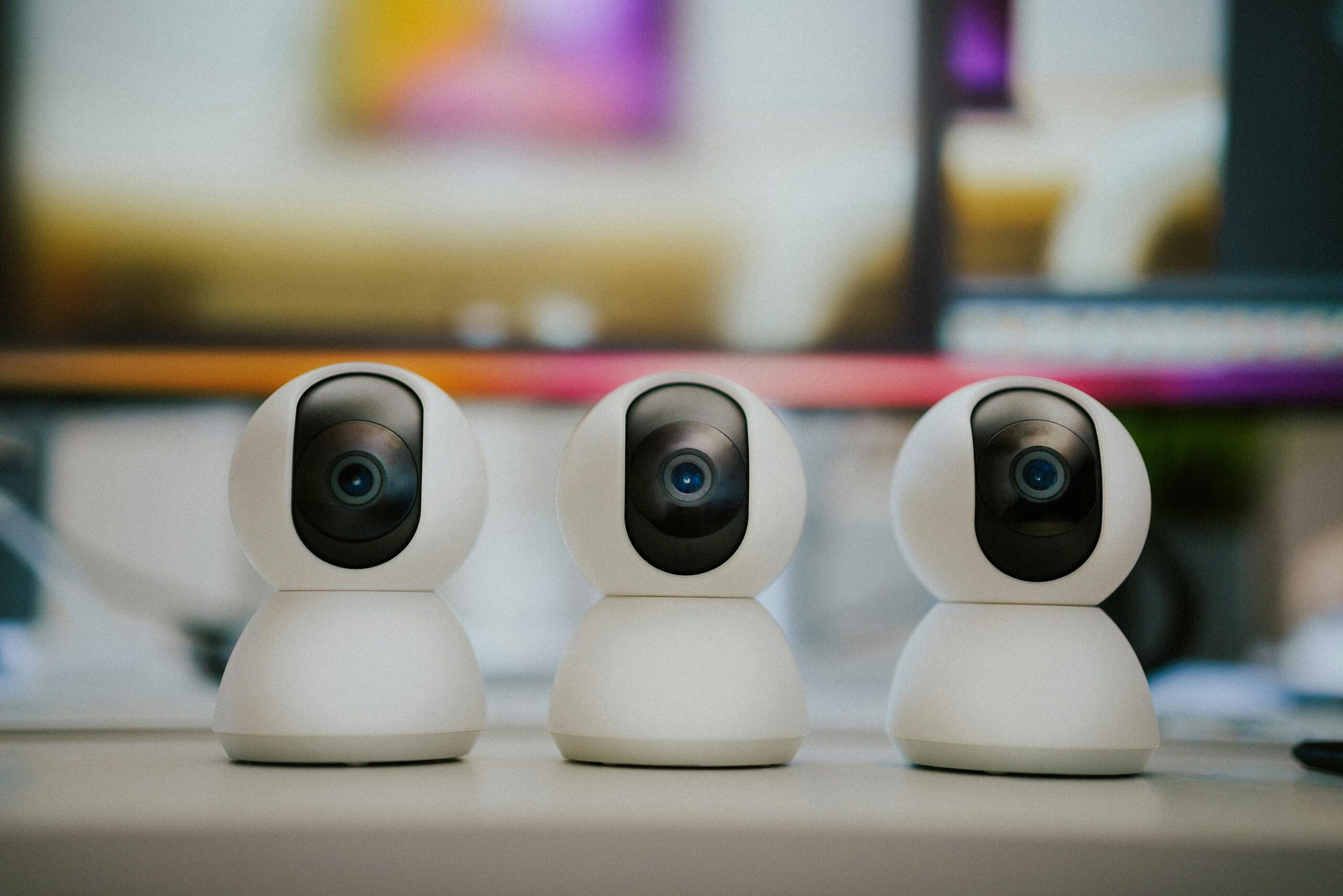
Alarm with camera price and key buying criteria
What an alarm with camera includes
An alarm with camera combines intrusion detection with visual verification. It is not simply a camera added to a basic alarm, but a security system where sensors, communication paths, control equipment, notifications and video support work together.
A professional installation may include an alarm control panel, indoor detectors, camera detectors, CCTV cameras, door and window contacts, sirens, mobile management, connection to an alarm receiving centre and dual communication. The final configuration depends on the property type, the exposure level and the vulnerable points that must be protected.
For a reliable quote, the first step is to study the property. Before comparing prices, it is important to know how many access points exist, whether there are outdoor areas, how long the property remains empty, whether visual verification is required and whether the alarm should be integrated with other security systems.
Alarm with camera price: what changes the quote
When people search for alarm with camera price, they often expect a fixed monthly figure. In professional security, however, a standard price rarely reflects the real needs of a property. Two homes of the same size may need different solutions if one is a ground-floor flat with a terrace and the other is an interior apartment. The same happens in businesses: an office, a shop, a warehouse or a high-risk commercial space have different requirements.
The quote is affected by the number of cameras, detector types, communication technology, cabling, connection to an alarm receiving centre, maintenance and possible CCTV integration. It also depends on installation complexity, equipment quality, network or mobile coverage and the need to protect outdoor areas.
The useful question is not only how much an alarm with camera costs, but what that price covers. A professional proposal should specify the devices, their location, the function of each element and how alerts are handled when an incident occurs.
It is also important to separate the initial installation cost from the service cost over time. A proposal may include equipment, configuration, connection, maintenance and technical support in different ways. For that reason, the cheapest figure is not always the clearest one. The most useful comparison is made when each quote explains what happens during installation, how the system communicates, how incidents are verified and what support is available after the system is active.
Main cost factors
The first factor is the number of points to protect. A home with one main door needs fewer devices than a house with a garden, garage, secondary access points and large windows. The second factor is the type of visual verification required: a camera detector is different from a CCTV system with recording, night vision or monitoring from several devices.
The price also changes when the installation is wired, when it uses GSM communication, when it connects through the property LAN or when several paths are combined. Dual communication increases reliability because the system can keep sending alerts even if one connection fails.
Components to review before comparing prices
This table explains the items that usually appear in a professional alarm quote and why each one matters. It does not replace a survey, but it helps compare proposals with a more technical view.
| Component | What it provides | Why it affects the quote |
|---|---|---|
| Alarm control panel | Coordinates detectors, alerts and communication. | Defines compatibility, expansion and reliability. |
| Camera detectors | Verify events linked to detection. | Quantity depends on access points and interior areas. |
| CCTV cameras | Supervise entrances, shared spaces or critical areas. | Resolution, night vision, recording and location affect the cost. |
| Dual communication | Keeps alerts active if one path fails. | Adds protection against outages, sabotage and technical failures. |
| Professional installation | Avoids blind spots and improves response. | Depends on cabling, complexity and property characteristics. |
| Maintenance | Supports inspections and continuous operation. | Improves long-term reliability. |
Camera detectors or CCTV cameras
A common question when evaluating alarm with camera price is whether camera detectors are enough or whether a CCTV system is needed. Both provide images, but they do not serve exactly the same purpose. A camera detector is linked to a detection event and helps verify a possible intrusion. It is useful for confirming alarms and reducing false incidents.
CCTV cameras are designed for more continuous supervision of strategic areas. They may record events, control entrances, monitor shared spaces or support a broader security plan. Depending on the site, cameras can be fixed, motorised, equipped with night vision or adapted to more demanding needs.
In some homes, camera detectors in key areas may be enough. In businesses, communities, warehouses or premises with open areas, CCTV can provide stronger control over entrances, storage areas, car parks and shared spaces.
Homes, second residences and houses with outdoor areas
In a home, cameras do not need to be installed everywhere. The professional approach is to study doors, hallways, accessible terraces, garages and outdoor points where an intrusion may occur. The goal is to protect without unnecessarily affecting privacy.
In apartments, priority is usually given to the main entrance, accessible windows and interior transit areas. In houses, detached homes or properties with land, the system may need more layers: secondary entrances, garage, garden, perimeter and outdoor viewing points.
When there are exterior areas, perimeter protection may be appropriate. This type of alarm detects an attempted intrusion before the intruder reaches the inside, increasing the ability to react. Integrated with cameras, it gives more visual information about what is happening.
A second residence requires particular attention because it may remain empty for long periods. In that situation, communication reliability, remote control and clear alerts become more relevant than having a large number of devices without a defined purpose. For daily-use homes, ease of use is equally important: the system should be simple to arm, disarm and manage so that it is used correctly every day.
Businesses, offices and residential communities
In businesses and offices, an alarm with camera has two main roles: deterrence and incident verification. A shop with a storefront, an office with IT equipment, a warehouse with stock or a residential community with shared entrances may need different solutions. The quote should therefore be based on the activity and the risk profile.
Some sectors may require a higher level of protection. Grade 3 alarms are intended for specific premises subject to stricter requirements and involve more technical installation, approved equipment and connection to an alarm receiving centre. In these cases, video surveillance can help visually verify incidents within a more complete system.
For premises with high-value goods, security fog can also be considered. It works as an active response by reducing visibility for the intruder within seconds. It does not replace cameras or detection, but it can complement the system when response time is critical.
Residential communities require particular care. Video surveillance should focus on entrances, garages and common areas, with proportionality and privacy in mind. The aim is to protect sensitive points, not to record spaces that add no real security value.
In offices, the main priority may be protecting access points, work equipment and rooms where sensitive material is stored. In retail, the system often focuses on doors, storefronts, stockrooms and closing hours. In warehouses, the design may include larger areas, loading bays, perimeter points and camera locations with wider fields of view. These differences explain why the same generic package cannot offer the same level of protection for every business.
Professional installation, maintenance and privacy
Installation directly affects both performance and cost. Good equipment placed poorly can leave blind spots, cause false alarms or fail to provide useful images when an incident occurs. Cameras and detectors should therefore be located according to a technical design rather than convenience alone.
Maintenance is also part of the decision. Cameras, connections, detectors, batteries, communication paths and settings should be checked periodically to ensure the system works when needed. With image-based systems, it is also important to review image quality, viewing angle, recording and remote access.
Video surveillance must respect privacy rules, especially in businesses and residential communities. People should be informed about the presence of cameras, recording should be limited to justified areas and public or third-party private spaces should not be captured except where legally allowed.
A professional installer also considers practical details that are easy to overlook: lighting conditions, possible reflections, camera height, internet stability, mobile coverage, electrical points and future expansion. These details affect the final performance of the system and can explain differences between two quotes that may look similar at first sight.
Why the lowest fee is not always the best choice
A very low offer may seem attractive, but it is important to check what is actually included. The proposal may lack professional installation, maintenance, dual communication, proper visual verification or enough equipment to cover the property. A low price loses value if the alarm does not communicate reliably, if cameras miss critical points or if the system creates frequent incidents.
Comparison should be based on the same level of detail: devices, installation, connection, maintenance, support, CCTV integration, future expansion and response to network or power failures.
How to request a tailored quote
To estimate alarm with camera price properly, the safest approach is to request a personalised survey. The property, access points, activity, schedules, vulnerable areas and expected level of protection should be reviewed before defining the system.
A useful quote should describe the recommended alarm, included devices, location of each element, communication paths, possible connection to an alarm receiving centre, maintenance conditions and future upgrades. For homes, the solution may focus on apartments, houses or perimeter protection. For companies, it may require wired systems, Grade 3 solutions, CCTV or security fog depending on the risk.
The best system is not necessarily the largest one. It is the system that matches the real need, protects the right points and remains simple enough to use every day.
During a survey, it is useful to explain how the property is used: when it is occupied, who needs access, whether there are pets, whether there are valuable goods, how often the owner travels and what previous security problems have occurred. This information helps avoid unnecessary devices and improves the accuracy of the final design.
The final proposal should be easy to understand. It should show what is included from the beginning, what can be expanded later and which elements are essential for security. This avoids decisions based only on a monthly fee and helps choose a system designed for long-term reliability, daily use and future security needs.
Recommended internal links
The article should link naturally to alarm systems, CCTV cameras, wired alarms, GSM alarms, LAN alarms, dual communication, perimeter alarms, Grade 3 alarms, security fog, apartment alarms in Madrid, house alarms in Madrid, business alarms in Madrid and the contact page. This helps users move toward the solution they need and strengthens the internal SEO architecture.
Frequently asked questions about alarms with camera and price
What is the price of an alarm with camera?
It depends on the property, number of cameras, detectors, installation, connection, maintenance and required security level. A technical survey is the most reliable way to calculate it.
Is a camera detector better than CCTV?
It depends on the purpose. A camera detector helps verify a specific intrusion event, while CCTV provides broader supervision of strategic areas.
Does an alarm with camera need maintenance?
Yes. Maintenance checks cameras, detectors, communication, batteries, recording and settings so the system responds correctly.
Can it be installed in a house with a garden?
Yes. Homes with gardens, patios or outdoor entrances can combine perimeter protection with cameras located at strategic points.
Does Vian Segur offer personalised quotes?
Yes. Vian Segur studies each property and proposes a solution adapted to its access points, exposure level and real security needs.
Request a personalised security survey
If you need a quote adapted to your case, you can request advice through the Te llamamos page. Vian Segur can review the property and propose a solution aligned with the protection you really need.
Sorry, the comment form is closed at this time.